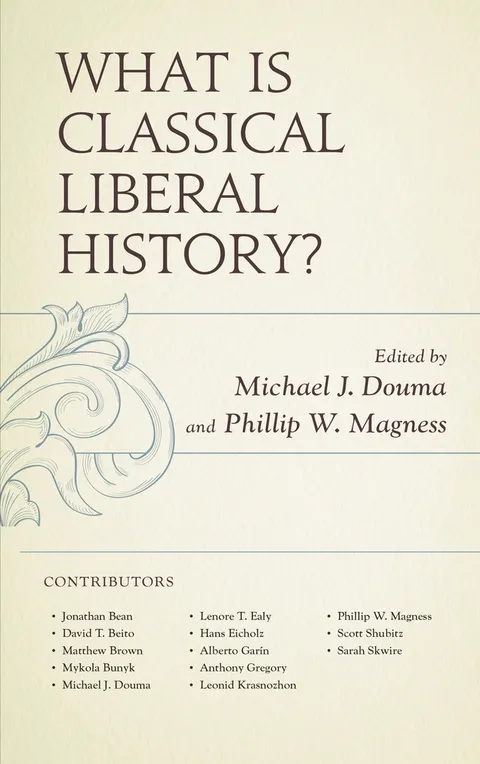
What Is Classical Liberal History?
Report an issue
Tell us what's wrong and we'll take a look.
Thanks – we got it. We'll review and follow up if needed.
Historians working in the classical liberal tradition believe that individual decision-making and individual rights matter in the making of history. History written in the classical liberal tradition emerged largely in the nineteenth century, when the field of history was first professionalized in Europe and the Americas. Professional historical research was then imbued with liberal values, which included rigorous attention to the sources, historicist suspicion of an ultimate mover, an honest and dispassionate rational outlook, and humility towards what could be known. Above all, liberals wanted to chart the history of liberty, warn against threats to liberty, and defend it in an evolving political world. They believed history was real, and that it had lessons to teach, but that these lessons could not provide sufficient knowledge to predict the future or reorganize society around a central plan.
This book demonstrates how the classical liberal tradition in historical writing persists to this day, but how it is often neglected and due for renewal. The book contrasts the classical liberal view on history with conservative, progressive, Marxist, and post-modern views.
Each of the eleven chapters address a different historical topic, from the development of classical liberalism in nineteenth century America to the the history of civil liberties and civil rights that stemmed from this tradition. Authors give particular attention to the importance of social and economic analysis. Each contributor was chosen as an expert in their field to provide a historiographical overview of their subject, and to explain what the classical liberal contribution to this historiography has been and should be. Authors then provide guidance towards possible tools of analysis and related research topics that future historians working in the classical liberal tradition could take up.
The authors wish to call upon other historians to recognize the important contributions to historical understanding that have come and can be provided by the insights of classical liberalism.
Phillip Magness
Phillip Magness is a church musician and missionary of The Lutheran Church--Missouri Synod. He set Luther's Small Catechism to music for the Growing in Christ curriculum (Concordia Publishing House). In addition to serving as a parish musician, he works in international missions as a sacred music educator in Africa.
Harold L. Senkbeil is executive director emeritus of DOXOLOGY: The Lutheran Center for Spiritual Care and Counsel. His pastoral experience of nearly five decades includes parish ministry, the seminary classroom, and parachurch leadership. He is the author of numerous books, including the award--winning The Care of Souls, Christ and Calamity, and Dying to Live..


Why Readwise Books?
Readwise Books is an ebook & audiobook platform that automatically logs how much you and your friends read, making it fun and easy to read more. Learn more →