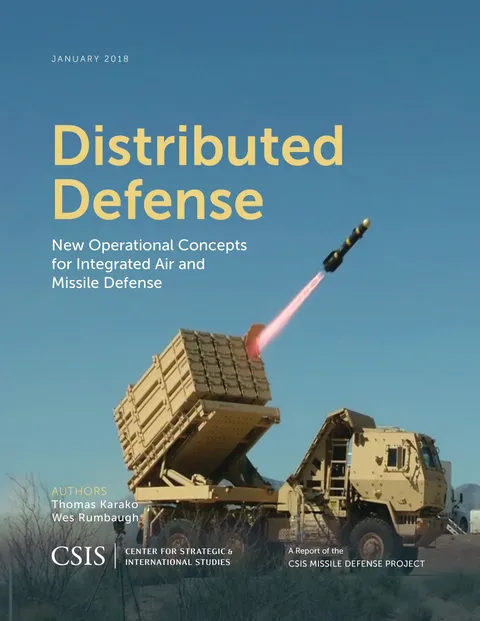
Distributed Defense
New Operational Concepts for Integrated Air and Missile Defense
Report an issue
Tell us what's wrong and we'll take a look.
Thanks – we got it. We'll review and follow up if needed.
Despite the rising salience of missile threats, current air and missile defense forces are far too susceptible to suppression. Today’s U.S. air and missile defense (AMD) force lacks the depth, capacity, and operational flexibility to simultaneously perform both missions. Discussions about improving AMD usually revolve around improvements to the capability and capacity of interceptors or sensors. Rather than simply doing more of the same, the joint integrated air and missile defense (IAMD) efforts might be well served by new or reinvigorated operational concepts, here discussed collectively as “Distributed Defense.” By leveraging networked integration, Distributed Defense envisions a more flexible and more dispersible air and missile defense force capable of imposing costs and dilemmas on an adversary, complicating the suppression of U.S. air and missile defenses. Although capability and capacity improvements remain essential to the high-end threats, the Distributed Defense concept focuses on creating a new architecture for today’s fielded or soon-to-be fielded IAMD force to boost flexibility and resilience.
Thomas Karako
Thomas Karako is a senior fellow and director of the Missile Defense Project at CSIS.
More by Thomas Karako




Why Readwise Books?
Readwise Books is an ebook & audiobook platform that automatically logs how much you and your friends read, making it fun and easy to read more. Learn more →