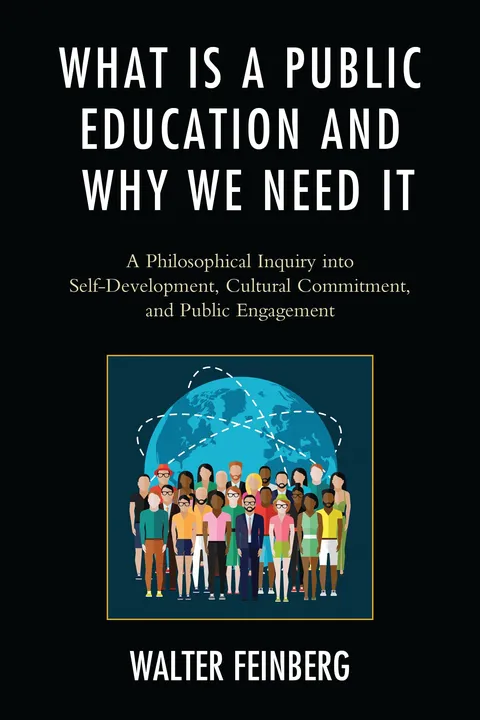
What Is a Public Education and Why We Need It
A Philosophical Inquiry into Self-Development, Cultural Commitment, and Public Engagement
Report an issue
Tell us what's wrong and we'll take a look.
Thanks – we got it. We'll review and follow up if needed.
The unique mission of a public education is to reproduce a civic public. For the most part this will not happen in a vacuum and requires specific institutions, the most prominent of which are the public schools. Publicly supported schools have other functions as well. They socialize, train, produce a workforce, and, hopefully, promote individual growth and autonomy. Walter Feinberg argues that while all of these functions may be carried on by private or religious schools as well, public schools should have the additional responsibility of reproducing a civic public for a diverse pluralistic society. As Feinberg demonstrates, the problem is that in the context of neoliberal ideology, where all the other educational functions are reduced to economic ones within a market context ruled by competition—nation to nation, state to state, community to community, school to school, teacher to teacher, student to student—the public function becomes less and less central and more and more difficult to carry out. What Is a Public Education and Why We Need It suggests ways to change this by bringing the idea of a true public education back into focus.
Walter Feinberg
Walter Feinberg is professor Emeritus of Philosophy of Education at the University of Illinois. His most recent book is Educating for Democracy. Bryan R. Warnick is the Daniel Tanner Foundation Professor of Education at Ohio State University.
More by Walter Feinberg


Why Readwise Books?
Readwise Books is an ebook & audiobook platform that automatically logs how much you and your friends read, making it fun and easy to read more. Learn more →