Nathan the Wise
Report an issue
Tell us what's wrong and we'll take a look.
Thanks – we got it. We'll review and follow up if needed.
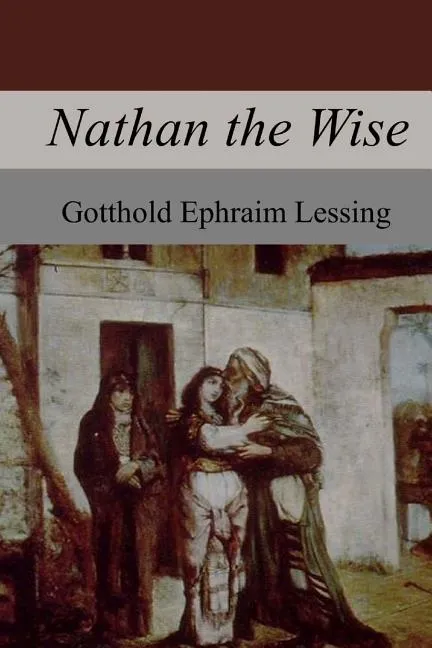
Gotthold Ephraim Lessing's "Nathan the Wise" remains a cornerstone of German drama and a powerful statement on religious tolerance. This enduring work from the Enlightenment era explores philosophical themes through its compelling narrative. A vital contribution to comparative religion, the play champions understanding and acceptance across different faiths.
This meticulously prepared print edition offers a fresh encounter with Lessing's influential drama. As a key example of European, specifically German, dramatic literature, "Nathan the Wise" continues to resonate with its timeless message of reason and humanity. Experience the power of Lessing's words in this classic exploration of faith, tolerance, and the search for truth.
This work has been selected by scholars as being culturally important, and is part of the knowledge base of civilization as we know it.
This work is in the public domain in the United States of America, and possibly other nations. Within the United States, you may freely copy and distribute this work, as no entity (individual or corporate) has a copyright on the body of the work.
Scholars believe, and we concur, that this work is important enough to be preserved, reproduced, and made generally available to the public. We appreciate your support of the preservation process, and thank you for being an important part of keeping this knowledge alive and relevant.
Gotthold Ephraim Lessing
Gotthold Ephraim Lessing was a German philosopher, dramatist, publicist, and art critic whose work shaped the course of German literature during the Enlightenment. Born on January 22, 1729, in Kamenz, Germany, he was the son of Johann Gottfried Lessing and Justine Salome Feller. From an early age, he displayed a keen interest in learning, which eventually led him to study theology and medicine before fully turning to literature and philosophy. Lessing s writings, both creative and theoretical, pushed forward ideas of religious tolerance, intellectual freedom, and the importance of critical inquiry. Among his most influential works are his plays and essays, which challenged rigid dogmas and encouraged open-minded discourse. His admiration for figures like Aristotle, William Shakespeare, Johann Joachim Winckelmann, and Voltaire shaped his intellectual development. Lessing s career spanned roles as a playwright, critic, and philosopher, making him a central figure in the German Enlightenment. He had siblings, including Karl Gotthelf Lessing and Dorothea Salome Lessing, with whom he maintained connections throughout his life. Lessing died on February 15, 1781, in Lower Saxony, Germany, leaving behind a legacy of bold thinking and transformative contributions to art, literature, and philosophy.
More by Gotthold Ephraim Lessing






Why Readwise Books?
Readwise Books is an ebook & audiobook platform that automatically logs how much you and your friends read, making it fun and easy to read more. Learn more →