Report an issue
Tell us what's wrong and we'll take a look.
Thanks – we got it. We'll review and follow up if needed.
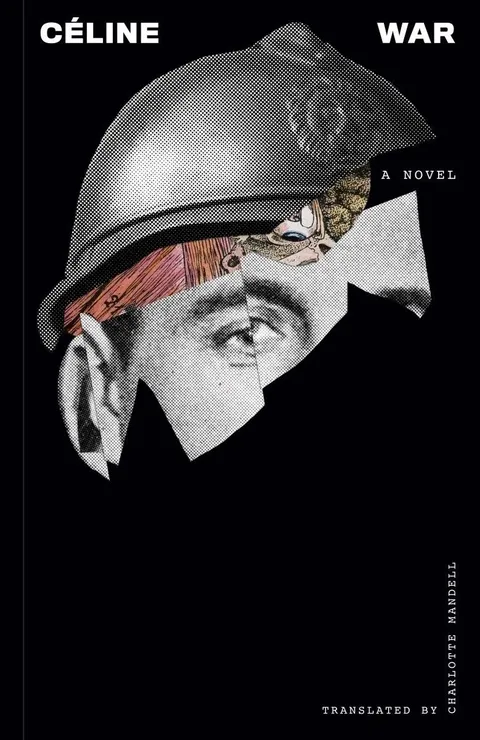
In an incredible turn of events, Louis-Ferdinand Céline, as if declaiming from his grave, thunders back to life: that inimitable, scorching, and monstrously powerful voice roars at us a new in this long-lost novel
Céline had long claimed that Death on the Installment Plan was part of a trilogy, and that the manuscripts of War and London had been stolen by the Resistance from his apartment, when he fled for his life—an abhorred collaborator—from Paris. Few believed him, but then, mysteriously, the manuscripts came to light in 2020. Greeted rapturously in France (“a miracle,” Le Monde; “the discovery of a great text,” Le Point), War is sure to be more controversy abroad. Though much revered as “the most blackly humorous and disenchanted voice in all of French literature” (London Review of Books), Céline is also reviled for his infamous antisemitic wartime pamphlets.
War begins with Ferdinand waking in shock on the battlefield, grievously injured, with all his comrades sprawled out dead around him: it’s a scene of visceral horror, carnage, and pain.
The novel’s key idea—that trench warfare lodges itself in the soldier’s head forever, goes on destroying him, cuts him off from those who have not been on the front, and makes the hypocrisies of their safe world repugnant—drives itself under the reader’s skin, powered by the sheer velocity of Céline’s voracious, gritty, raw, graphic style.
Louis-Ferdinand Céline
Louis-Ferdinand Celine (1894-1961) was a French author best known for his works Journey to the End of the Night and Death on the Installment Plan. After returning from war with a partially paralyzed right arm, Celine worked with the passport office of the French Consulate in London, later moved to Africa to work for a French lumber company, moved back to France, lectured about tuberculosis for the Rockefeller Foundation, and earned a medical degree from the University of Rennes. It was while he worked as a doctor that he turned to writing. He had a successful, albeit controversial, career as a writer until he suffered a stroke in 1961 and passed away.
More by Louis-Ferdinand Céline
Charlotte Mandell
Translated by
A Chevalier de l'Ordre des Arts et des Lettres, Charlotte Mandell has translated over fifty books from the French, including works by Flaubert, Proust, and Genet. In 2001 she received a translation prize from the Modern Language Association for her translation of Faux Pas by Maurice Blanchot, in 2018 she won the National Translation Award in Prose for her translation of Compass by Mathias Énard, in 2024 she received the Thornton Wilder Translation Prize from the Academy of Arts and Letters, and in 2026 she received the French American Foundation Translation Prize for her translation of The Deserters by Mathias Énard. She lives in the Hudson Valley with her husband, the poet Robert Kelly.



Why Readwise Books?
Readwise Books is an ebook & audiobook platform that automatically logs how much you and your friends read, making it fun and easy to read more. Learn more →