Report an issue
Tell us what's wrong and we'll take a look.
Thanks – we got it. We'll review and follow up if needed.
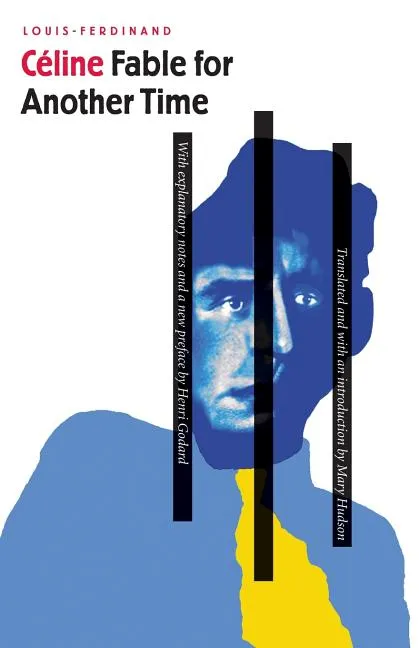
Fable for Another Time is one of the most significant and far-reaching literary texts of postwar France. Composed in the tumultuous aftermath of World War II, largely in the Danish prison cell where the author was awaiting extradition to France on charges of high treason, the book offers a unique perspective on the war, the postwar political purges in France, and Louis-Ferdinand Céline's own dissident politics. The tale of a man imprisoned and reviled by his own countrymen, the Fable follows its character's decline from virulent hatred to near madness as a result of his violent frustration with the hypocrisy and banality of his fellow human beings. In part because of the story's clear link to his own case--and because of the legal and political difficulties this presented--Céline was compelled to push his famously elliptical, brilliantly vitriolic language to new and extraordinary extremes in Fable for Another Time. The resulting linguistic and stylistic innovation make this work stand out as one of the most original and revealing literary undertakings of its time. Louis-Ferdinand Céline (1894-1961) was a French writer and physician best known for the novels Journey to the End of the Night (1932) and Death on the Installment Plan (1936). Céline was accused of collaboration during World War II and fled France in 1944 to live first in Germany, then in Denmark, where he was imprisoned for over a year; an amnesty in 1951 allowed him to return to France. Céline remains anathema to a large segment of French society for his antisemitic writings; at the same time his novels are enormously admired by each new generation.
Louis-Ferdinand Céline
Louis-Ferdinand Céline (1894-1961) was a French writer and doctor whose novels are antiheroic visions of human suffering. Accused of collaboration with the Nazis, Céline fled France in 1944 first to Germany and then to Denmark. Condemned by default (1950) in France to one year of imprisonment and declared a national disgrace, Céline returned to France after his pardon in 1951, where he continued to write until his death. His classic books include Journey to the End of the Night, Death on the Installment Plan, London Bridge, North, Rigadoon, Conversations with Professor Y, Castle to Castle, and Normance.
More by Louis-Ferdinand Céline


Why Readwise Books?
Readwise Books is an ebook & audiobook platform that automatically logs how much you and your friends read, making it fun and easy to read more. Learn more →