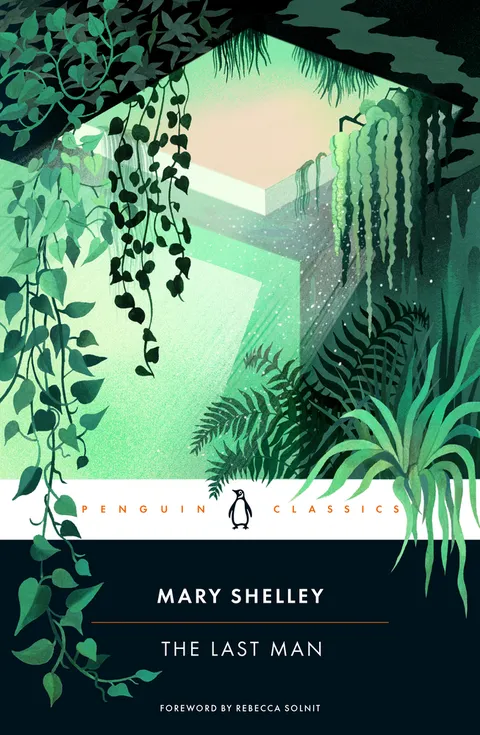
The Last Man
Report an issue
Tell us what's wrong and we'll take a look.
Thanks – we got it. We'll review and follow up if needed.
A Penguin Classic
Written while Mary Shelley was in a self-imposed lockdown after the loss of her husband and children, and in the wake of intersecting crises including the climate-changing Mount Tambora eruption and a raging cholera outbreak, The Last Man (1826) is the first end-of-mankind novel, an early work of climate fiction, and a prophetic depiction of environmental change. Set in the late twenty-first century, the book tells of a deadly pandemic that leaves a lone survivor, and follows his journey through a post-apocalyptic world that's devoid of humanity and reclaimed by nature. But rather than give in to despair, Shelley uses the now-ubiquitous end-times plot to imagine a new world where freshly-formed communities and alternative ways of being stand in for self-important politicians serving corrupt institutions, and where nature reigns mightily over humanity--a timely message for our current era of climate collapse and political upheaval. Brimming with political intrigue and love triangles around characters based on Percy Shelley and scandal-dogged poet Lord Byron, the novel also broaches partisan dysfunction, imperial warfare, refugee crises, and economic collapse--and brings the legacy of her radically progressive parents, William Godwin and Mary Wollstonecraft, to bear on present-day questions about making a better world less centered around "man." Shelley's second major novel after Frankenstein, The Last Man casts a half-skeptical eye on romantic ideals of utopian perfection and natural plenitude while looking ahead to a greener future in which our species develops new relationships with non-human life and the planet.
Mary Shelley
Mary Wollstonecraft Godwin was born in 1797, the daughter of two of the leading radical writers of the age. Her mother died just days after her birth and she was educated at home by her father and encouraged in literary pursuits. She eloped with and subsequently married the Romantic poet Percy Bysshe Shelley, but their life together was full of hardship. The couple were ruined by disapproving parents and Mary lost three of her four children. Although its subject matter was extremely dark, her first novel Frankenstein (1818) was an instant sensation. Subsequent works such as Mathilda (1819), Valperga (1823) and The Last Man (1826) were less successful but are now finally receiving the critical acclaim that they deserve.
More by Mary Shelley


Why Readwise Books?
Readwise Books is an ebook & audiobook platform that automatically logs how much you and your friends read, making it fun and easy to read more. Learn more →