Report an issue
Tell us what's wrong and we'll take a look.
Thanks – we got it. We'll review and follow up if needed.

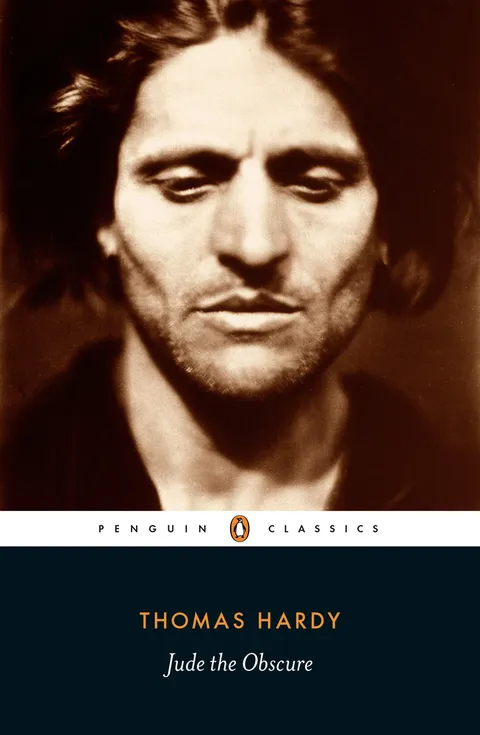
Jude's story -- his futile desire to better himself through education, his failed marriage and doomed love for the free-spirited Sue Bridehead -- shows with heartbreaking clarity the devastating effects of prejudice and oppression upon innocent minds, and forms a passionate plea for tolerance.
Because of its frank treatment of human sexuality and its unflinching fatalism, Jude the Obscure aroused such a storm of controversy upon its publication in 1895 that, partly in response, Thomas Hardy abandoned the art of novel-writing altogether and devoted the rest of his life to poetry. Though we have come a long way in our social attitudes in the ensuing century, nothing about Hardy's masterpiece has lost its power to shock us and disturb our dreams.
Thomas Hardy
Thomas Hardy (1840-1938) was an English poet and novelist who initially trained and showed promise as an architect before finding success as a writer. His style and form followed in the Victorian realist tradition of George Eliot and the Romanticism of William Wordsworth. Hardy's work displays a concern that the conventions of Victorian society were damaging to many and places an emphasis on empathy toward those it made suffer. His richly drawn characters engage in a timeless striving for happiness and a chance to rise above a world that offers implacable barriers to their hopes. Although he regarded himself primarily as a poet, he first gained notoriety as the author of novels like Far from the Madding Crowd (1874), The Mayor of Casterbridge (1886), Tess of the d'Ubervilles (1891), and Jude the Obscure (1895). His poetry was acclaimed by some younger poets during his lifetime and lauded posthumously by greats like Ezra Pound and Philip Larkin.
More by Thomas Hardy















Why Readwise Books?
Readwise Books is an ebook & audiobook platform that automatically logs how much you and your friends read, making it fun and easy to read more. Learn more →