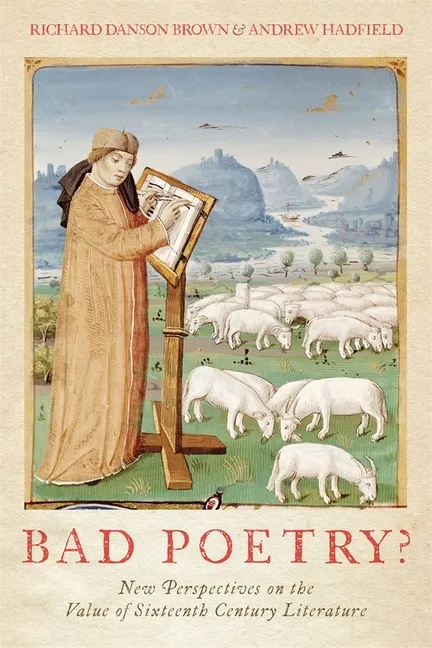
Bad Poetry? New Perspectives on the Value of Sixteenth-Century Literature
Report an issue
Tell us what's wrong and we'll take a look.
Thanks – we got it. We'll review and follow up if needed.
In the wake of C. S. Lewis's still-contested taxonomy of 'drab' and 'golden' poetic ages, this volume rethinks the critical and aesthetic stakes of bad poetry in early modern England-not to dismiss it, but to ask what it meant, how it functioned, and why it mattered.
Revisiting poets like Arthur Gorges, Walter Ralegh, Thomas Lodge, and Thomas Churchyard, contributors interrogate the literary marketplace, aesthetic judgment, and evolving generic conventions between 1520 and 1609. Through close readings of works by Spenser, Shakespeare, Skelton, and others-alongside notorious outliers like Richard Stanyhurst-the collection considers poetic failure as both historical artifact and interpretive opportunity. From the clumsy excess of hexameters to the ideological weight of neo-Latin verse, from scribal emendations of Mother Hubberds Tale to the uncertain metrical charge of the lengthy fourteener, these essays reveal how poets and readers alike navigated shifting ideas of taste, style, and literary value.
Grounded in close reading, textual scholarship, and formal analysis, this collection offers a model of sustained, comparative literary criticism that is both theoretically engaged and deeply historicised. It foregrounds the interpretive value of stylistic awkwardness and aesthetic resistance while charting the long afterlives of poetic judgment from Lewis to the present.
Andrew Hadfield
Andrew Hadfield is emeritus professor of English at the University of Sussex. He is the author of many books, including Lying in Early Modern English Literature and Culture. He is a general editor of the complete works of Thomas Nashe and a regular reviewer for the Times Literary Supplement.


Why Readwise Books?
Readwise Books is an ebook & audiobook platform that automatically logs how much you and your friends read, making it fun and easy to read more. Learn more →