Report an issue
Tell us what's wrong and we'll take a look.
Thanks – we got it. We'll review and follow up if needed.
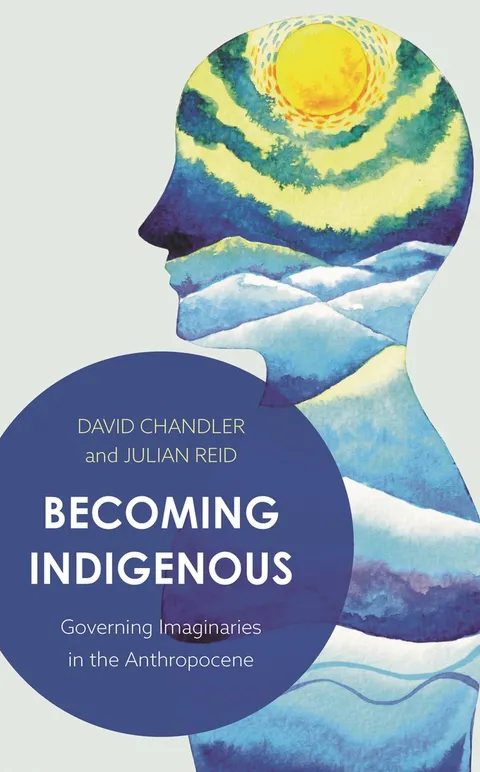
Representations of indigenous peoples, while never static, have always served the interests of settler-colonialism. Historically, the dominant framing marginalised indigenous practices as legacies of the distant past. Today indigenous approaches are demanded in order for settler-colonialism itself to have a future. Becoming indigenous, we are told, is a necessity if humanity is to survive and cope with the catastrophic changes wrought by modernist excess in the Anthropocene.
Becoming Indigenous provides an agenda-setting critique, analysing how and why indigeneity has been reduced to instrumental imaginaries of perseverance and resilience. Indigenous ‘alternatives’ are today central to a range of governing discourses, which promise empowerment but are highly disciplinary. Critical theorists often endorse these framings, happy to instrumentalise indigenous peoples as caretakers of the environment or as teaching the moderns about their ‘more-than-human’ responsibilities.
Chandler and Reid argue that these discourses have little to do with indigenous struggles or with challenging settler-colonial power. In fact, instrumentalising indigeneity in these ways merely reinforces neoliberal hegemony, marginalising critical alternatives for both indigenous and non-indigenous peoples alike.
David Chandler
David Chandler was born in Pittsburgh, Pennsylvania in 1971. He attended Penn State and received an MFA in Creative Writing.
The Ancient Blades trilogy is his first foray into fantasy.
More by David Chandler






Why Readwise Books?
Readwise Books is an ebook & audiobook platform that automatically logs how much you and your friends read, making it fun and easy to read more. Learn more →