Report an issue
Tell us what's wrong and we'll take a look.
Thanks – we got it. We'll review and follow up if needed.
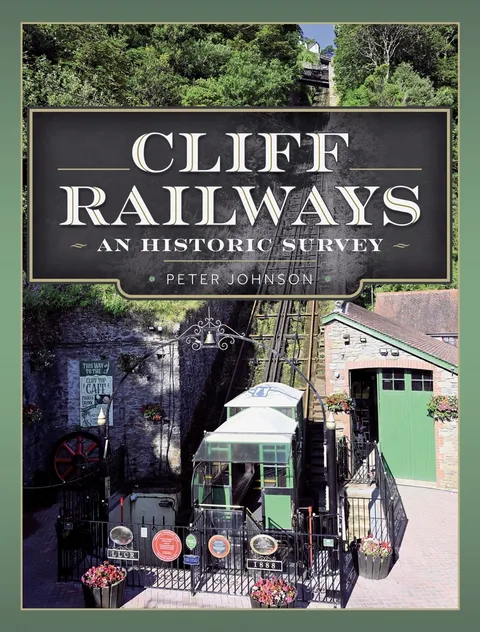
Cliff railways emerged from seaside demands for easier beach access, shaping Britain's transport imagination.
In the 19th Century there was a widespread feeling in seaside resorts with cliffs that visitor numbers would be increased if there was an easy way of reaching, and more importantly, returning from the beach, avoiding flights of stairs or long zig-zag paths. To address this issue, the first cliff railway was built at Scarborough in 1875. Since then, another twenty-nine, or thirty if the Leas lift at Folkestone, which was duplicated in 1890, is counted as two, have been built, including three at inland locations.
Despite having the same function, all the cliff railways are different and have their own characteristics. Some of them still use water as a power source. The remainder use electric motors.
In addition to telling the story of Britain's cliff railways, author Peter Johnson tells the story of the authorised but unbuilt cliff railways, vertical lifts and electric stairways that serve or served the same function in a few places, and adds details of what might be called 'cliff railway derivatives, ' steep-grade, rope-hauled, railways, airport automated people movers, and modern inclined lift installations that might have been built as cliff railways if they had been built a hundred years ago.
To compile this new book, Peter Johnson, who has written books on Welsh and narrow gauge railways for Pen & Sword, has carried out extensive research in government files and old newspapers. Many of the illustrations have not been published previously and a few of them are very rare.
Peter Johnson
Peter Johnson grew up in Buffalo, New York, at a time when they had a good football team, which seems like fifty years ago. Similar to Benny Alvarez and his friends, Peter always loved words, knowing he was going to be a teacher or a professional baseball player. Also, being from a long line of Irish storytellers, he loved reading and telling tales, and when he realized that his stories changed every time he told them, and that he could get paid for this kind of lying, he decided to become a novelist. His first middle grade novel, The Amazing Adventures of John Smith, Jr. AKA Houdini, was named one of the Best Children's Books by Kirkus Reviews, and he's received many writing fellowships, most notably from the National Endowment for the Arts.
More by Peter Johnson







Why Readwise Books?
Readwise Books is an ebook & audiobook platform that automatically logs how much you and your friends read, making it fun and easy to read more. Learn more →