Report an issue
Tell us what's wrong and we'll take a look.
Thanks – we got it. We'll review and follow up if needed.
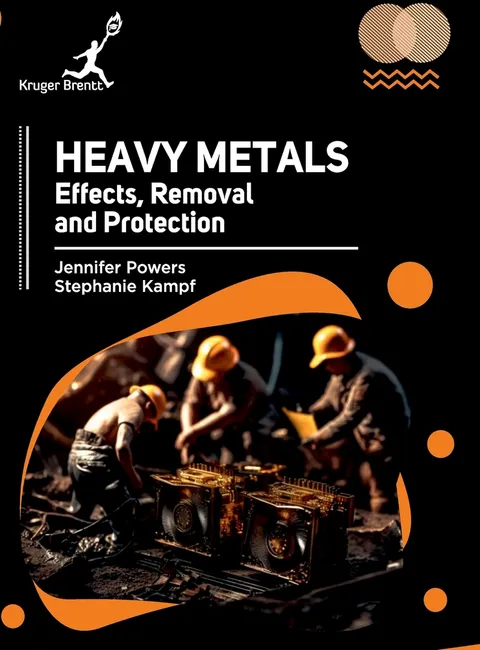
Understanding Heavy Metals: Provide an overview of heavy metals, including their chemical properties, sources of environmental contamination (e.g., industrial activities, mining, agriculture), and common heavy metals of concern such as lead, mercury, cadmium, and arsenic.
Health and Environmental Effects: Discuss the health impacts of heavy metal exposure on humans and wildlife, including acute and chronic toxicity, bioaccumulation, and potential long-term health effects such as cancer, neurological damage, and developmental issues. Examine environmental effects on soil, water, and ecosystems.
Detection and Monitoring: Explore methods for detecting and monitoring heavy metal contamination, including analytical techniques such as atomic absorption spectroscopy (AAS), inductively coupled plasma mass spectrometry (ICP-MS), and field sampling procedures.
Removal and Remediation Technologies: Discuss various technologies and methods for removing and remediating heavy metal contamination, including physical methods (e.g., filtration, adsorption), chemical methods (e.g., precipitation, oxidation-reduction), and biological methods (e.g., phytoremediation, bioremediation).
Prevention and Protection Strategies: Explore strategies for preventing heavy metal contamination and protecting human health and the environment, including best practices for industrial processes, waste management, public awareness campaigns, and policies for reducing heavy metal emissions and exposure.




Stephanie Kampf
Stephanie Kampf is a Professor of Watershed Science at Colorado State University, USA. She has degrees in Geosciences (BA) from Williams College; Hydrogeology (MS) from University of Nevada, Reno, and Civil and Environmental Engineering (PhD) from the University of Washington. She teaches classes in hydrology and watershed problem analysis and has published over 80 scientific journal articles on climate, hydrology, geomorphology, and fire. Her current research examines snowmelt runoff, headwater streams, and how wildfires have affected streamflow and erosion in mountain watersheds. Select publications: Kampf SK, McGrath D, Sears MG, Fassnacht SR, Kiewiet L, Hammond JC, 2022. Increasing wildfire impacts on snowpack in the western US. Proceedings of the National Academy of Sciences, 119(39), e2200333119. https: //doi.org/10.1073/pnas.2200333119Kampf SK, Dwire KA, Fairchild MP, Dunham J, Snyder CD, Jaeger KL, Luce CH, Hammond JC, Wilson C, Zimmer MA, Sidell M, 2021. Managing nonperennial headwater streams in temperate forests of the United States. Forest Ecology and Management, 497, 119523. https: //doi.org/10.1016/j.foreco.2021.119523Kampf SK, Burges SJ, Hammond JC, Bhaskar A, Covino TP, Eurich A, Harrison H, Lefsky M, Martin C, McGrath D, Puntenney-Desmond K, Willi K, 2020. The case for an open water balance: Re-envisioning network design and data analysis for a complex, uncertain world. Water Resources Research. 56(6), e2019WR026699, https: //doi.org/10.1029/2019WR026699Kampf SK, Mirus BB, 2020. Subsurface and surface flow leading to channel initiation. Treatise on Geomorphology, https: //doi.org/10.1016/B978-0-12-409548-9.12448-0Webpage: https: //sites.google.com/view/kampfcsu/home


Why Readwise Books?
Readwise Books is an ebook & audiobook platform that automatically logs how much you and your friends read, making it fun and easy to read more. Learn more →