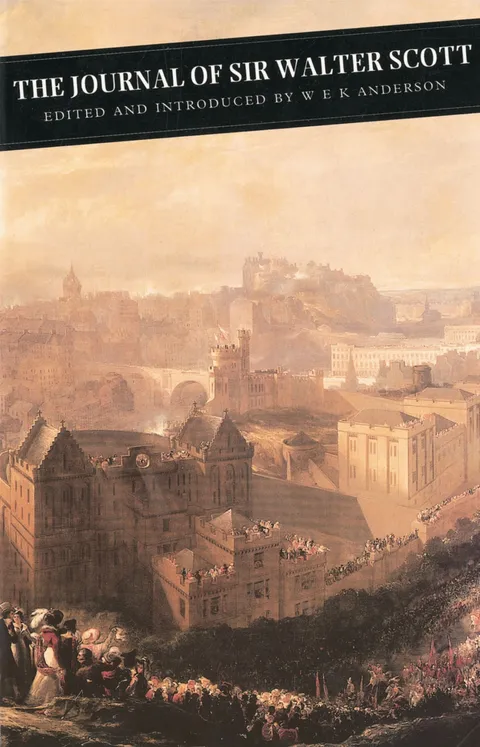
The Journal of Sir Walter Scott
Report an issue
Tell us what's wrong and we'll take a look.
Thanks – we got it. We'll review and follow up if needed.
This edition of the great Scottish author's personal journal is "truly a classic . . . compelling right to the very last unfinished sentence" (Scotland on Sunday, UK). The celebrated 18th and 19th century Scottish author of such classics as Ivanhoe, Rob Roy, and The Lady of the Lake delivers what many regard as his greatest work: a day-to-day account of the last six years of his life as he navigates financial ruin, bereavement, and increasing ill health. Laboring to pay off debts of more than £120,000, Scott emerges, not simply as a great writer, but as an almost heroic figure whose generosity and even temper shine through at all times. This edition of Scott's journals presents a complete edited text and notes drawing on a wealth of other material including correspondence, reminiscences and the memoirs of Scott's contemporaries. It remains one of the standards by which Scott scholarship is judged. "Scott's Journal is a hugely important piece of Scottish, and indeed European literature, published here with an incisive introduction, brilliantly judicious annotation and appendices and an excellent index . . . Walter Scott has never been so readable." —The Herald, UK
Walter Scott
Walter Scott was a Scottish novelist, poet, historian, and biographer widely recognized as a foundational figure in Scottish literature, Romantic historical fiction, and 19th-century literary history. Born in Edinburgh, Scotland, and later residing at Abbotsford in Selkirkshire, he played a major role in shaping modern perceptions of historical narrative fiction, national identity in literature, and European Romanticism. Scott is best known for developing the historical novel form, blending medieval history, folklore traditions, and dramatic storytelling into influential literary works that shaped both British and global fiction. His writings often explore themes of Scottish cultural heritage, feudal history, political conflict, and social transformation, making him central to studies of historical romance literature and Gothic-influenced narrative traditions. He was also deeply interested in antiquarian research, folklore preservation, and historical documentation, which influenced both his fiction and non-fiction works. Scott had five children, including Sophia, Walter, Anna, and Charles. His legacy continues to define historical fiction development, Romantic-era literature, and cultural nationalism in literary studies, establishing him as one of the most influential authors in Western literary history.
More by Walter Scott








Why Readwise Books?
Readwise Books is an ebook & audiobook platform that automatically logs how much you and your friends read, making it fun and easy to read more. Learn more →