Report an issue
Tell us what's wrong and we'll take a look.
Thanks – we got it. We'll review and follow up if needed.
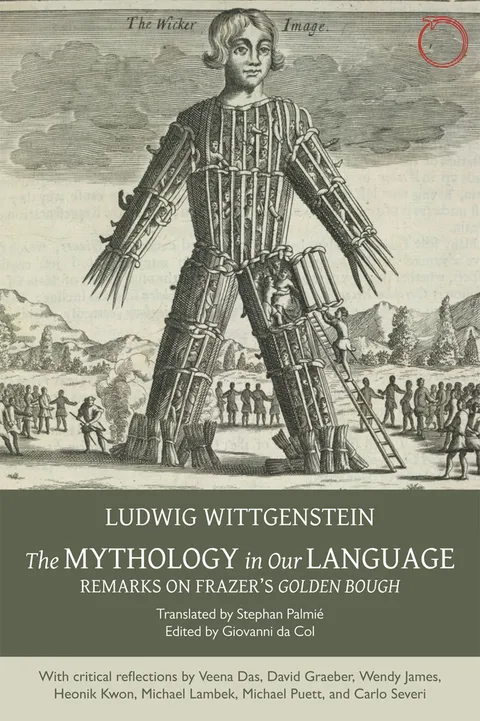
In 1931 Ludwig Wittgenstein wrote his famous Remarks on Frazer's "Golden Bough," published posthumously in 1967. At that time, anthropology and philosophy were in close contact--continental thinkers drew heavily on anthropology's theoretical terms, like mana, taboo, and potlatch, in order to help them explore the limits of human belief and imagination. Now the book receives its first translation by an anthropologist, in the hope that it can kick-start a new era of interdisciplinary fertilization.
Wittgenstein's remarks on ritual, magic, religion, belief, ceremony, and Frazer's own logical presuppositions are as lucid and thought-provoking now as they were in Wittgenstein's day. Anthropologists find themselves asking many of the same questions as Wittgenstein--and in a reflection of that, this volume is fleshed out with a series of engagements with Wittgenstein's ideas by some of the world's leading anthropologists, including Veena Das, David Graeber, Wendy James, Heonik Kwon, Michael Lambek, Michael Puett, and Carlo Severi.
Ludwig Wittgenstein
Ludwig Wittgenstein (1889-1951) was born in Austria and studied at Cambridge under Bertrand Russell. He volunteered to serve in the Austrian army at the outbreak of World War I, and in 1918 was captured and sent to a prison camp in Italy, where he finished his masterpiece, Tractatus Logico-Philosophicus, one of the most important philosophical works of all time. After the war Wittgenstein eventually returned to Cambridge to teach.
More by Ludwig Wittgenstein



Why Readwise Books?
Readwise Books is an ebook & audiobook platform that automatically logs how much you and your friends read, making it fun and easy to read more. Learn more →