Report an issue
Tell us what's wrong and we'll take a look.
Thanks – we got it. We'll review and follow up if needed.
In Democracy and Impunity, Alexander Lee examines the politics of law enforcement in India and why the police perform so poorly across multiple dimensions--a level of performance that is exceptional even for similar developing democracies. Lee shows that high levels of impunity in India are the result of two interdependent policy choices--the Indian police are severely under-resourced and have very low autonomy in relation to senior members of the political elite.
While Lee focuses on India, his account sheds light on how nations can find themselves in the "policy trap" of low police resources and low police autonomy, and why they find it so hard to get out of this equilibrium. He also explains why some politicians find it in their interests to have a weak and tightly controlled police force, why many police officers work with these politicians, and discusses specific reforms that could alleviate the impunity crisis.
Alexander Lee
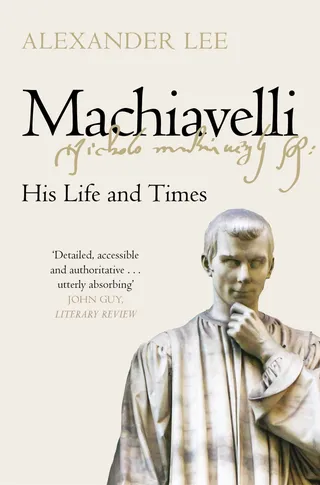
Alexander Lee is a fellow in the Centre for the Study of the Renaissance at the University of Warwick. Educated at the universities of Cambridge and Edinburgh, he has previously held positions at the universities of Oxford, Bergamo, Luxembourg, Lyon 2 and Lyon 3, amongst others. He is the author of several acclaimed books, including Ghetto: The Jews of Venice, Machiavelli: His Life and Times (a Financial Times and New Statesman ‘Book of the Year’) and Humanism and Empire: The Imperial Ideal in Fourteenth-Century Italy. He writes a regular column for History Today and frequently appears on television, radio, and podcasts. He is a fellow of the Royal Historical Society.
More by Alexander Lee























Why Readwise Books?
Readwise Books is an ebook & audiobook platform that automatically logs how much you and your friends read, making it fun and easy to read more. Learn more →