Report an issue
Tell us what's wrong and we'll take a look.
Thanks – we got it. We'll review and follow up if needed.
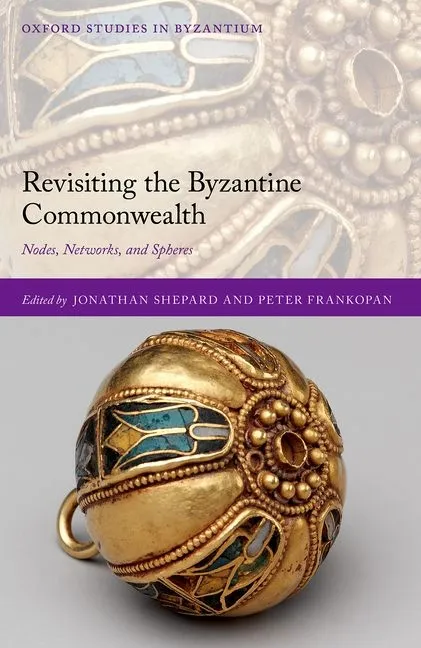
Pinning down Byzantium (or East Rome) is as difficult today as it was for contemporaries during its 1,000-year-long existence. Dimitri Obolensky sought to characterize its impact on Eastern Europe in his classic The Byzantine Commonwealth, focusing on the elements of religious doctrine, rites, and law which ruling elites there took from the emperor acting in tandem with the Constantinopolitan patriarchate. Chapters in this volume, Revisiting the Byzantine Commonwealth, address such basic questions as who the Byzantines thought they were and how they managed to maintain their hegemonial stance for so long. Other chapters reappraise the uses of Byzantium to elites and also to other sectors of societies from the Upper Adriatic to the Volga. Surveys are offered of three spheres which functioned independently of (and in one case, expressly in antithesis to) Byzantium, yet which overlapped and were constantly interacting with it--the Latin west, the Islamic-Christian east, and the world of the steppes. Candidates for 'Commonwealth membership' can be found within these spheres, too, along with transregional networks which functioned regardless of political borders. Aspects of Byzantium appealed to the variegated societies and cultures around it in very different ways, with the imperial elite taking keen interest in neighbouring peoples and making the most of Soft Power as material resources dwindled from the thirteenth century on. Some periods of outsiders' engagement with the empire were short-lived, but others proved long-lasting, underpinned by ecclesiastical institutions and monastic networks. The volume aims to foster a more rounded approach to the phenomenon of Byzantium, and a better understanding of how and why it impinges on so many Eurasian cultures and polities to this day.
Peter Frankopan
Peter Frankopan is Professor of Global History at the University of Oxford and Senior Research Fellow at Worcester College, Oxford. He is also UNESCO Professor of Silk Roads Studies at King's College, Cambridge. The Silk Roads: A New History of the World, published by Bloomsbury in 2015, has been a global bestseller topping charts around the world. It was No. 1 Sunday Times bestseller and remained in the top 10 for nine months after publication. It was named one of the 'Books of the Decade' 2010-2020 by the Sunday Times. The New Silk Roads: The Present and Future of the World was published by Bloomsbury in 2018 and won the Human Sciences prize of the Carical Foundation in 2019. The Earth Transformed: An Untold History was published by Bloomsbury in 2023. Named The Times History Book of the Year, it was also a Financial Times, Guardian, Observer, Sunday Times, Independent, New Yorker and Le Point Book of the Year.
More by Peter Frankopan













Why Readwise Books?
Readwise Books is an ebook & audiobook platform that automatically logs how much you and your friends read, making it fun and easy to read more. Learn more →