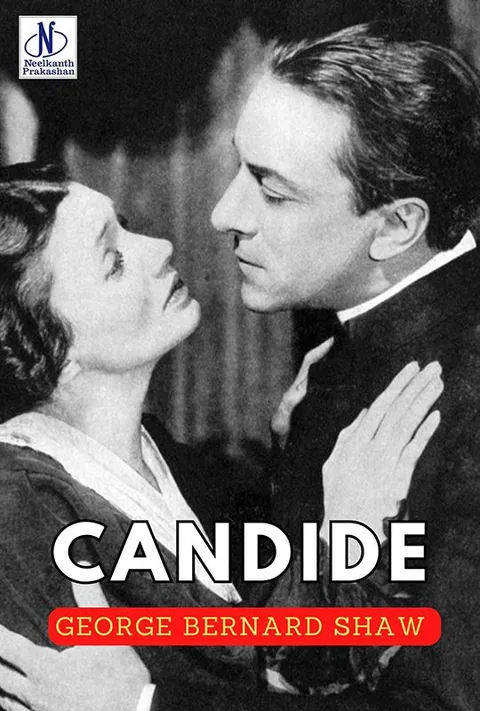
Candide
Report an issue
Tell us what's wrong and we'll take a look.
Thanks – we got it. We'll review and follow up if needed.
"Candide" is a novella written by the French philosopher and writer Voltaire, not by George Bernard Shaw. It was first published in 1759.
The novella is a satirical work that follows the adventures of its protagonist, Candide, who is an innocent and optimistic young man. Throughout the story, Candide experiences a series of misfortunes, including being expelled from his comfortable home, witnessing natural disasters, and encountering various forms of human cruelty and folly. Despite these trials, Candide maintains his belief in the philosophy of his mentor, Dr. Pangloss, who espouses the idea that "all is for the best in the best of all possible worlds."
"Candide" is celebrated for its sharp wit, biting satire, and critique of optimism and theodicy (the attempt to reconcile the existence of evil with the belief in a benevolent deity). Voltaire uses the character of Candide to expose the flaws and absurdities of philosophical optimism and to challenge prevailing notions of human nature, morality, and the nature of the universe.
While George Bernard Shaw was a playwright and critic known for his wit and social commentary, "Candide" is not among his works. However, both Voltaire and Shaw were influential figures in the realm of satire and social criticism, and their works continue to be studied and appreciated for their enduring relevance and literary merit.
Bernard Shaw
From 26 July 1856 to 2 November 1950, Irish playwright, critic, polemicist, and political activist George Bernard Shaw was alive. He preferred to be referred to simply as Bernard Shaw. From the 1880s until his death and even after, he had a significant impact on Western politics, theater, and society. He produced more than sixty plays, including classics like Saint Joan (1913), Pygmalion (1913), and Man and Superman (1902). (1923). Shaw became a well-known playwright during his time and was awarded the Nobel Prize in literature in 1925 for his works that combine historical allegory and contemporary satire. Before Shaw's first play, Arms and the Man, published in 1894, became a success in the public eye, years passed. He tried to infuse new realism into English-language drama, influenced by Henrik Ibsen. He had established himself as a reputable theater and music critic by the mid-1880s. After having a political awakening, he joined the gradualist Fabian Society and swiftly advanced to the position of principal pamphleteer. Before Shaw's first play, Arms and the Man, published in 1894, became a success in the public eye, years passed. He tried to infuse new realism into English-language drama, influenced by Henrik Ibsen.
More by Bernard Shaw












Why Readwise Books?
Readwise Books is an ebook & audiobook platform that automatically logs how much you and your friends read, making it fun and easy to read more. Learn more →