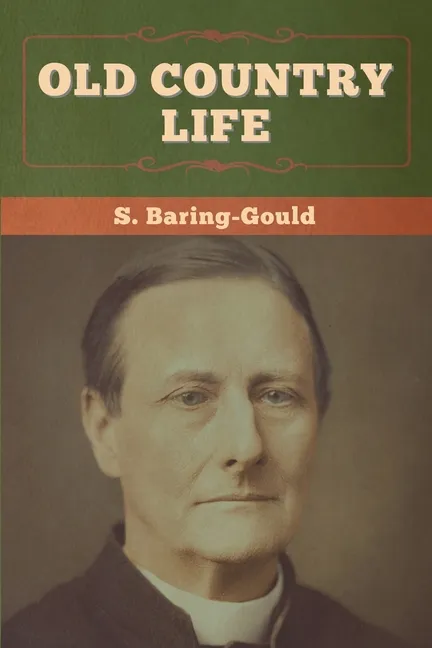
Old Country Life
Report an issue
Tell us what's wrong and we'll take a look.
Thanks – we got it. We'll review and follow up if needed.
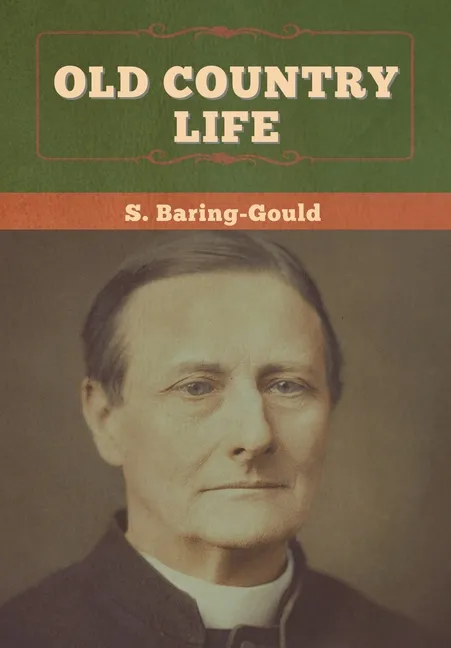
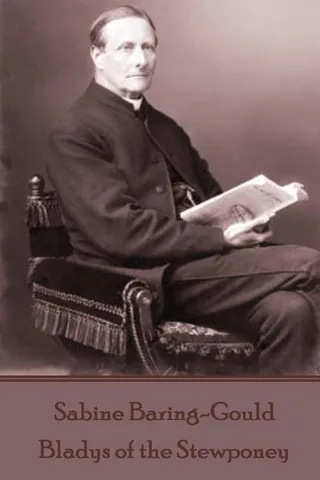
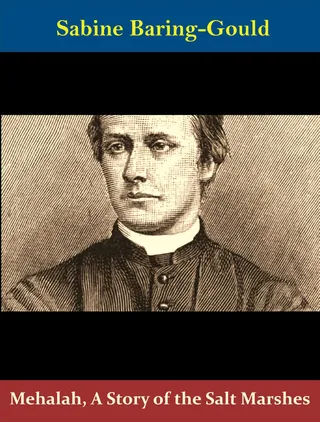
The Reverend Sabine Baring-Gould (28 January 1834 - 2 January 1924) of Lew Trenchard in Devon, England, was an Anglican priest, hagiographer, antiquarian, novelist, folk song collector and eclectic scholar. His bibliography consists of more than 1240 publications, though this list continues to grow. His family home, the manor house of Lew Trenchard, near Okehampton, Devon, has been preserved as he had it rebuilt and is now a hotel. He is remembered particularly as a writer of hymns, the best-known being "Onward, Christian Soldiers" and "Now the Day Is Over". He also translated the carol "Gabriel's Message" from the Basque language to English.
Baring-Gould wrote many novels, including The Broom-Squire set in the Devil's Punch Bowl (1896), Mehalah: a story of the salt marshes (1880), Guavas the Tinner (1897), the 16-volume The Lives of the Saints, and the biography of the eccentric poet-vicar of Morwenstow, Robert Stephen Hawker. He also published nearly 200 short stories in assorted magazines and periodicals. Many of these short stories were collected together and republished as anthologies, such as his Book of Ghosts (1904), Dartmoor Idyllys (1896), and In a Quiet Village (1900). His folkloric studies resulted in The Book of Were-Wolves (1865), one of the most frequently cited studies of lycanthropy. He habitually wrote while standing, and his desk can be seen in the manor.
One of his most enduringly popular works was Curious Myths of the Middle Ages, first published in two parts during 1866 and 1868, and republished in many other editions since then. "Each of the book's twenty-four chapters deals with a particular medieval superstition and its variants and antecedents," writes critic Steven J. Mariconda. H. P. Lovecraft termed it "that curious body of medieval lore which the late Mr. Baring-Gould so effectively assembled in book form." ... (wikipedia.org)
S Baring-Gould
S. Baring Gould (1834-1924) was a prolific English writer, known for his extensive contributions to literature across various genres, including historical fiction, biography, and folklore. Born in the early 19th century, Gould's work often reflects his deep interest in the cultural and historical aspects of rural England, particularly the Dartmoor region. Gould is perhaps best known for his novel Urith: A Tale of Dartmoor, which exemplifies his talent for blending historical detail with romantic drama and adventure. His writing frequently delves into local legends and folklore, capturing the essence of English countryside life with a rich, immersive narrative style. In addition to his fiction, Gould was an accomplished folklorist and historian, dedicating much of his career to documenting and preserving regional traditions and stories. His work contributed significantly to the understanding of English rural life and customs. S. Baring Gould's legacy endures through his vivid storytelling and his efforts to capture the unique cultural heritage of England, making him a respected figure in the world of literature and historical documentation.
More by S Baring-Gould



Why Readwise Books?
Readwise Books is an ebook & audiobook platform that automatically logs how much you and your friends read, making it fun and easy to read more. Learn more →