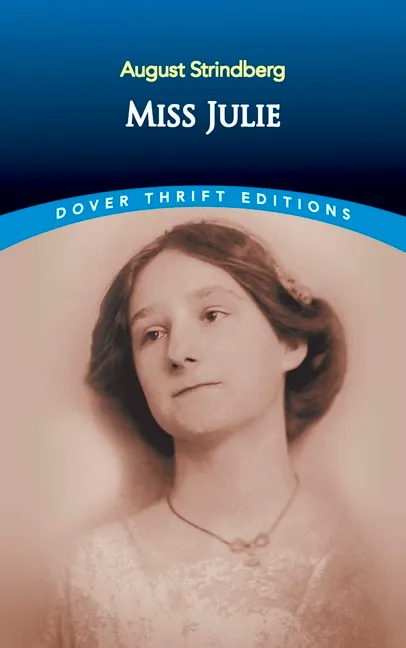
Miss Julie
Report an issue
Tell us what's wrong and we'll take a look.
Thanks – we got it. We'll review and follow up if needed.
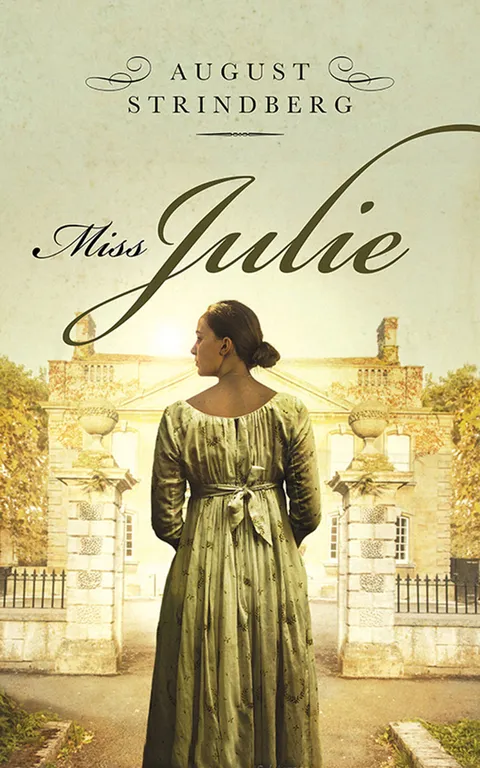
In Miss Julie, a willful young aristocrat, whose perverse nature has already driven her fiancé to break off their engagement, pursues and effectively seduces her father's valet during the course of a Midsummer's Eve celebration. The progress of that seduction and the play's stunning denouement shocked Swedish audiences who first attended the play in 1889.
Despite its controversial debut, this now-classic drama, inspired by the new ideas of naturalism and psychology that swept Europe in the late 19th century, helped to shape modern theater, and remains one of the most potent-and most frequently performed-of modern plays. The full text of Miss Julie is reprinted here as translated by Edwin Björkman, complete with Strindberg's critical preface to the play, considered by many to be one of the most important manifestos in theater history.
August Strindberg
August Strindberg was a prolific writer who often drew directly from his personal experience. He wrote more than sixty plays and thirty works of fiction, autobiography, history, cultural analysis, and politics during his career, which spanned four decades. A bold experimenter and iconoclast throughout, he explored a wide range of dramatic methods and purposes, from naturalistic tragedy, monodrama, and history plays to his anticipations of expressionist and surrealist dramatic techniques. From his earliest work, Strindberg developed innovative forms of dramatic action, language, and visual composition. He is considered the father of modern Swedish literature and The Red Room has frequently been described as the first modern Swedish novel.
More by August Strindberg









Why Readwise Books?
Readwise Books is an ebook & audiobook platform that automatically logs how much you and your friends read, making it fun and easy to read more. Learn more →