Report an issue
Tell us what's wrong and we'll take a look.
Thanks – we got it. We'll review and follow up if needed.
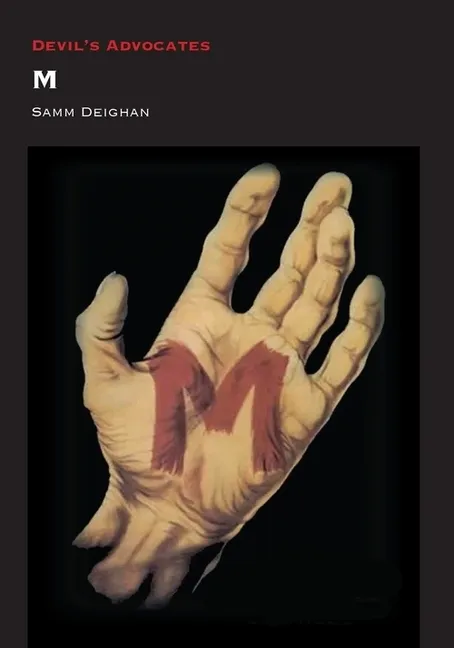
Fritz Lang's first sound feature, M (1931), is one of the earliest serial killer films in cinema history and laid the foundation for future horror movies and thrillers, particularly those with a disturbed killer as protagonist. Peter Lorre's child killer, Hans Beckert, is presented as monstrous, yet sympathetic, building on themes presented in the earlier German Expressionist horror films like The Cabinet of Dr. Caligari and The Hands of Orlac. Lang eerily foreshadowed the rising fascist horrors in German society, and transforms his cinematic Berlin into a place of urban terror and paranoia. Samm Deighan explores the way Lang uses horror and thriller tropes in M, particularly in terms of how it functions as a bridge between German Expressionism and Hollywood's growing fixation on sympathetic killers in the '40s. The book also examines how Lang made use of developments within in forensic science and the criminal justice system to portray a somewhat realistic serial killer on screen for the first time, at once capturing how society in the '30s and '40s viewed such individuals and their crimes and shaping how they would be portrayed on screen in the horror films to come.
Samm Deighan
Samm Deighan is a New York-based film historian, author of The Legacy of World War II in European Arthouse Cinema (2021) and editor of Revolution in 35mm: Political Violence and Resistance in Cinema from the Arthouse to the Grindhouse (2024). She also hosts the Eros + Massacre podcast.
More by Samm Deighan


Why Readwise Books?
Readwise Books is an ebook & audiobook platform that automatically logs how much you and your friends read, making it fun and easy to read more. Learn more →