Report an issue
Tell us what's wrong and we'll take a look.
Thanks – we got it. We'll review and follow up if needed.
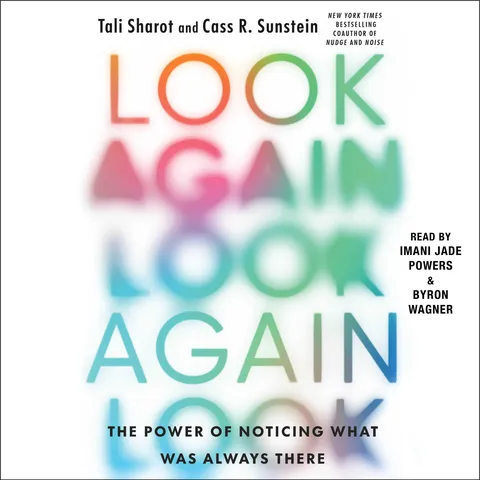
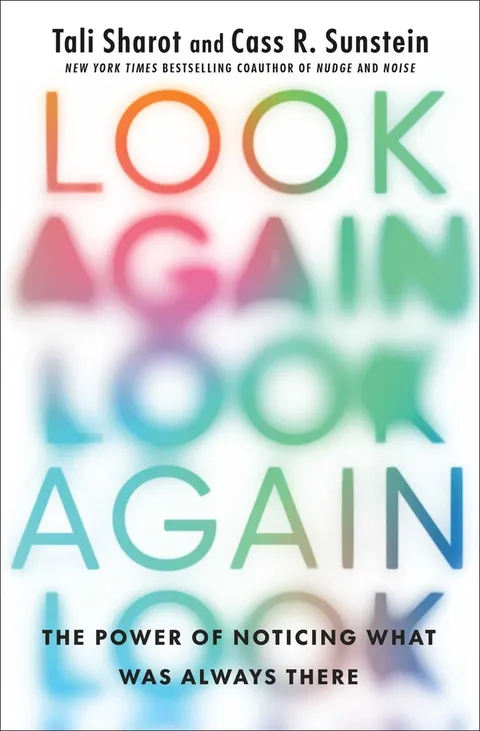
This “smart and fun read, and a valuable way to revitalize your life” (Walter Isaacson) deftly explains how disrupting our well-worn routines, both good and bad, can rejuvenate and reset our brains for the better.
Have you ever noticed that what is exciting on Monday tends to become boring on Friday? Even passionate relationships, stimulating jobs, and breathtaking works of art lose their sparkle after a while. As easy as it is to stop noticing what is most wonderful in our lives, it’s also possible to stop noticing what is terrible. People get used to dirty air. They become unconcerned by their own misconduct, blind to inequality, and are more liable to believe misinformation than ever before.
Now, neuroscience professor Tali Sharot and Harvard law professor (and presidential advisor) Cass R. Sunstein investigate why we stop noticing both the great and not-so-great things around us and how to “dishabituate” at the office, in the bedroom, at the store, on social media, and in the voting booth.
This groundbreaking and “sensational guide to a more psychological rich life” (Angela Duckworth, New York Times bestselling author), based on decades of research, illuminates how we can reignite the sparks of joy, innovate, and recognize where improvements urgently need to be made. The key to this disruption—to seeing, feeling, and noticing again—is change. By temporarily changing your environment, changing the rules, changing the people you interact with—or even just stepping back and imagining change—you regain sensitivity, allowing you to identify more clearly the bad and more deeply appreciate the good.
Tali Sharot
TALI SHAROT has a Ph.D. in psychology and neuroscience from New York University. She is currently the director of the Affective Brain Lab at University College London. Her research on optimism, memory and emotion has been featured in leading scholarly journals and media outlets, including Newsweek, the BBC, The Washington Post, The Boston Globe, The Wall Street Journal, Time, New Scientist, Nature, Science, and many others. Her website is www.theoptimismbias.com
Cass R. Sunstein
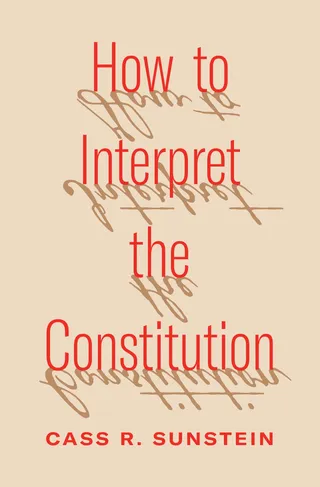
Cass R. Sunstein is the Robert Walmsley University Professor at Harvard and the founder and director of the Program on Behavioral Economics and Public Policy at Harvard Law School. He is the author of hundreds of articles and dozens of books, including Impeachment: A Citizen's Guide, Nudge (with Richard Thaler), Law and Leviathan (with Adrian Vermeule), How to Interpret the Constitution, On Freedom, and Can It Happen Here?: Authoritarianism in America. He is a recipient of the Holberg Prize, sometimes described as the equivalent of the Nobel Prize for the humanities and social sciences.
More by Cass R. Sunstein


Why Readwise Books?
Readwise Books is an ebook & audiobook platform that automatically logs how much you and your friends read, making it fun and easy to read more. Learn more →