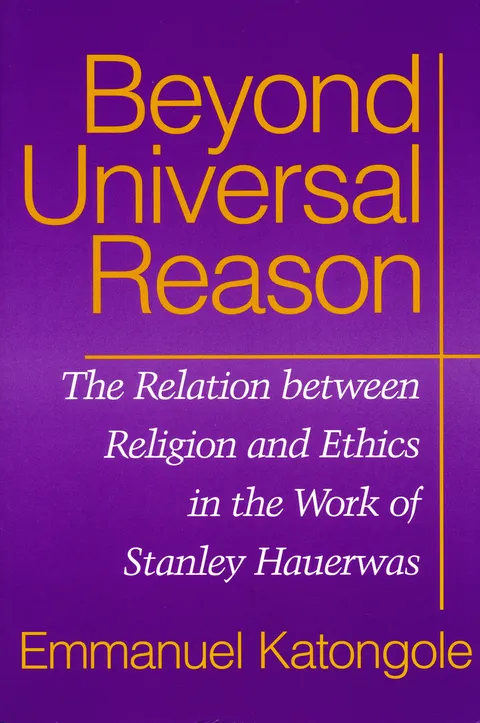
Beyond Universal Reason
The Relation between Religion and Ethics in the Work of Stanley Hauerwas
Report an issue
Tell us what's wrong and we'll take a look.
Thanks – we got it. We'll review and follow up if needed.
In The Peaceable Kingdom Stanley Hauerwas claims that "to begin by asking what is the relation between theology and ethics is to have already made a mistake." Hauerwas's claim, and his contribution toward a socially constituted and historically embodied account of the moral life and moral reason, are often charged with sectarianism, relativism, and tribalism. Emmanuel Katongole defends Hauerwas's dismissal of the traditional philosophical "problem" of the relation between ethics and religion. It is, he argues, part of Hauerwas's wider attempt to set aside the dominant Kantian moral tradition. Standard fare in moral philosophy, inspired by that tradition, fosters a highly formal, ahistorical view of ethics that does not do justice to our experience of ourselves as moral agents.
Emmanuel Katongole
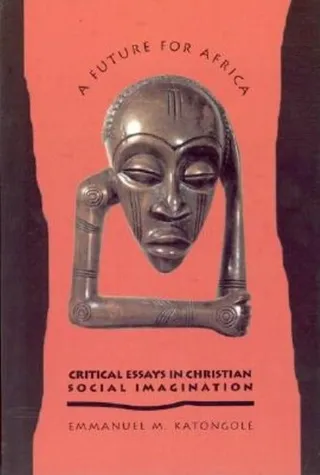
Emmanuel Katongole (Ph.D., Catholic University of Louvain) is associate professor of theology and world Christianity at Duke Divinity School. He grew up in Uganda, was ordained a Catholic priest of Kampala diocese, and taught philosophy and ethicsat the Uganda National Seminary. He now teaches on the face of Jesus in Africa, the Rwanda genocide, politics, violence and theology, and AIDS and other social challenges. He is the author and editor of several books, including A Future for Africa and African Theology Today. Katongole and Chris Rice are founding codirectors of the Center for Reconciliation at Duke Divinity School.
More by Emmanuel Katongole


Why Readwise Books?
Readwise Books is an ebook & audiobook platform that automatically logs how much you and your friends read, making it fun and easy to read more. Learn more →