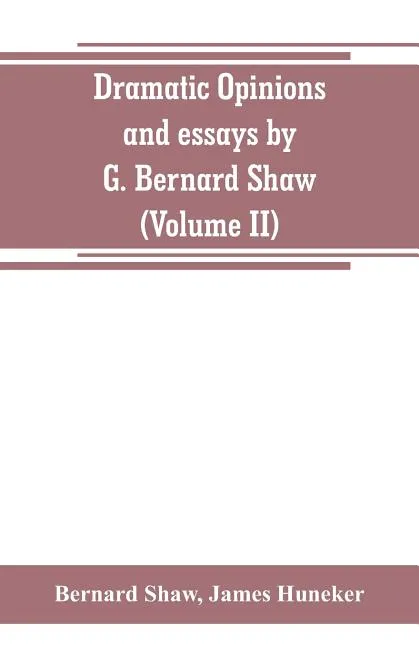
Dramatic opinions and essays by G. Bernard Shaw; containing as well A word on the Dramatic opinions and essays, of G. Bernard Shaw (Volume II)
Report an issue
Tell us what's wrong and we'll take a look.
Thanks – we got it. We'll review and follow up if needed.
Bernard Shaw did not review plays; he prosecuted them. Opinions sharpened to a point. In this second volume of Dramatic Opinions and Essays, his voice ranges from the footlights to the wider arguments that made the theatre a battleground of ideas. Part theatre criticism anthology, part manifesto, these collected theatre reviews and literary criticism essays show Shaw at his most bracing: witty, exacting, impatient with laziness, alert to what actors, managers, and audiences actually do. Expect dramatic criticism and satire aimed at cant, plus shrewd notes on playwrights and stagecraft and the pressures of repertoire, realism, and taste. Read alongside the era's modern drama debates, the pieces catch the turn from late 19th century habits toward edwardian British theatre, with memorable attention to European influence, including incisive Henrik Ibsen criticism. Shaw's reach extends beyond London premieres, testing ideals of performance, morality, and money with relentless logic and comic sting. For collectors, this is a landmark of Victorian drama criticism and a key document in the making of modern theatrical conversation; for casual readers, it is lively writing with bite, full of clear judgments you can argue with on the train home. Ideal theatre studies reading and a stimulating companion for drama literature students, it also rewards anyone curious about how criticism can shape art in public. Republished by Alpha Editions in a careful modern edition, this volume preserves the spirit of the original while making it effortless to enjoy today - a heritage title prepared for readers and collectors alike.
Bernard Shaw
From 26 July 1856 to 2 November 1950, Irish playwright, critic, polemicist, and political activist George Bernard Shaw was alive. He preferred to be referred to simply as Bernard Shaw. From the 1880s until his death and even after, he had a significant impact on Western politics, theater, and society. He produced more than sixty plays, including classics like Saint Joan (1913), Pygmalion (1913), and Man and Superman (1902). (1923). Shaw became a well-known playwright during his time and was awarded the Nobel Prize in literature in 1925 for his works that combine historical allegory and contemporary satire. Before Shaw's first play, Arms and the Man, published in 1894, became a success in the public eye, years passed. He tried to infuse new realism into English-language drama, influenced by Henrik Ibsen. He had established himself as a reputable theater and music critic by the mid-1880s. After having a political awakening, he joined the gradualist Fabian Society and swiftly advanced to the position of principal pamphleteer. Before Shaw's first play, Arms and the Man, published in 1894, became a success in the public eye, years passed. He tried to infuse new realism into English-language drama, influenced by Henrik Ibsen.
More by Bernard Shaw









James Huneker
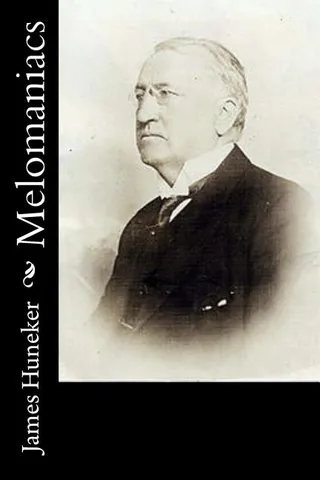
James Gibbons Huneker was an American writer and critic, renowned for his work in the fields of art, music, literature, and theater. Born in Philadelphia, Pennsylvania, Huneker was a colorful and ambitious figure, known for his intellectual depth and bold personality. He was a prominent critic of his time, known for his sharp insight into the works of artists and composers. His writing was characterized by a blend of passion and philosophical exploration, often delving into the intricacies of creative expression. Huneker was particularly fascinated by the tension between idealism and realism, a theme he often explored in his essays and critiques. His relationship with Clio Hinton Bracken, which began in 1892, was a significant part of his personal life. Huneker s legacy as a critic and writer remains influential, as his works continue to be admired for their intellectual rigor and artistic appreciation. He passed away on February 9, 1921, in Brooklyn, New York, leaving behind a body of work that contributed to shaping the landscape of American criticism in the late 19th and early 20th centuries. His insights into art and creativity are still regarded as significant contributions to the field of cultural critique.
More by James Huneker



Why Readwise Books?
Readwise Books is an ebook & audiobook platform that automatically logs how much you and your friends read, making it fun and easy to read more. Learn more →