Report an issue
Tell us what's wrong and we'll take a look.
Thanks – we got it. We'll review and follow up if needed.
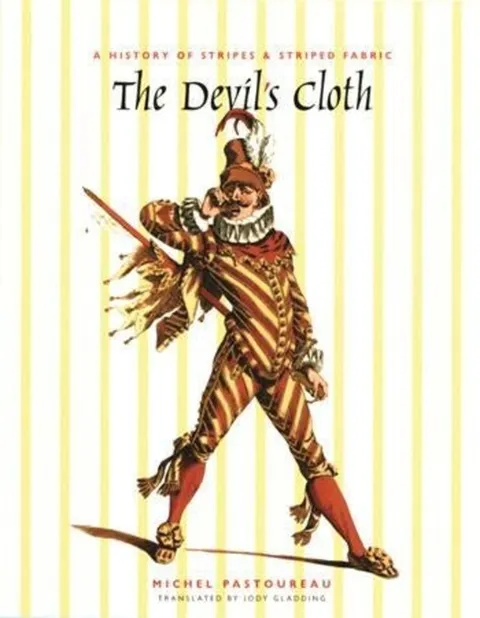
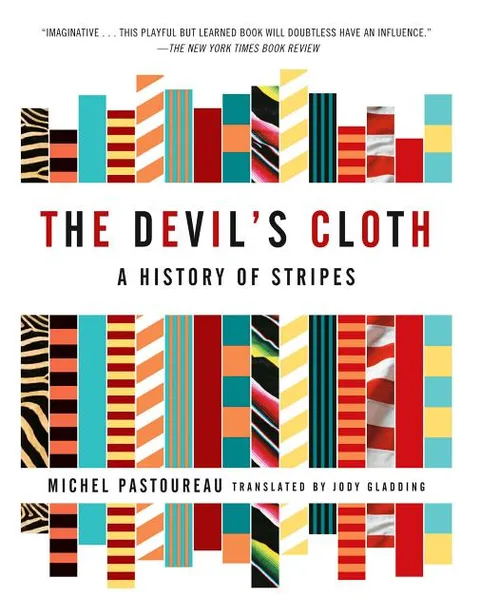
To stripe a surface serves to distinguish it, to point it out, to oppose it or associate it with another surface, and thus to classify it, to keep an eye on it, to verify it, even to censor it.
Throughout the ages, the stripe has made its mark in mysterious ways. From prisoners' uniforms to tailored suits, a street sign to a set of sheets, Pablo Picasso to Saint Joseph, stripes have always made a bold statement. But the boundary that separates the good stripe from the bad is often blurred. Why, for instance, were stripes associated with the devil during the Middle Ages? How did stripes come to symbolize freedom and unity after the American and French revolutions? When did the stripe become a standard in men's fashion? "In the stripe," writes author Michel Pastoureau, "there is something that resists enclosure within systems." So before putting on that necktie or waving your country's flag, look to The Devil's Cloth for a colorful history of the stripe in all its variety, controversy, and connotation.
Jody Gladding
Translated by
Jody Gladding is a poet and translator. She has published three full-length collections of poetry and translated nearly 30 books from French. Her awards and honors include MacDowell and Stegner Fellowships, a Whiting Writers’ Award, and a Yale Younger Poets Prize. She lives in Vermont.


Why Readwise Books?
Readwise Books is an ebook & audiobook platform that automatically logs how much you and your friends read, making it fun and easy to read more. Learn more →