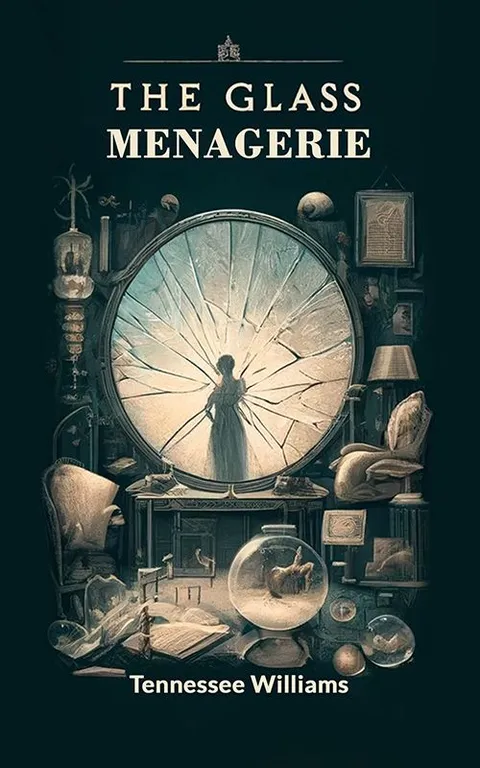
The Glass Menagerie
Report an issue
Tell us what's wrong and we'll take a look.
Thanks – we got it. We'll review and follow up if needed.
"The Glass Menagerie" is a memory play that explores the lives of the Wingfield family, focusing on their personal struggles and family dynamics. The play is narrated by Tom Wingfield, who reflects on the past and the impact it has had on his family. he narrator and protagonist, Tom is a young man working at a warehouse who dreams of escaping his economic hardship and achieving his aspirations. He is burdened by the responsibilities of supporting his family and is torn between his desire for freedom and his sense of duty. Laura’s collection of glass animals represents her delicate nature and the overall theme of fragility. The glass symbolizes both her vulnerability and the elusive nature of her dreams. The play is structured as a recollection of Tom’s memories, blending dreams and reality. The use of symbolism and expressionistic elements underscores the emotional and psychological depth of the characters. The play ends on a poignant note as Tom leaves his family in pursuit of his own dreams, but he is haunted by memories of his sister Laura and his mother Amanda. The final scenes underscore the themes of emotional conflict, unfulfilled dreams, and the inevitable consequences of living in a world of illusion and reality.
Tennessee Williams
Tennessee Williams (1911-1983) is the acclaimed author of many books of letters, short stories, poems, essays, and a large collection of plays, including The Glass Menagerie, A Streetcar Named Desire, Camino Real, Cat on a Hot Tin Roof, Orpheus Descending, The Night of the Iguana, and The Rose Tattoo.
More by Tennessee Williams










Why Readwise Books?
Readwise Books is an ebook & audiobook platform that automatically logs how much you and your friends read, making it fun and easy to read more. Learn more →