Report an issue
Tell us what's wrong and we'll take a look.
Thanks – we got it. We'll review and follow up if needed.
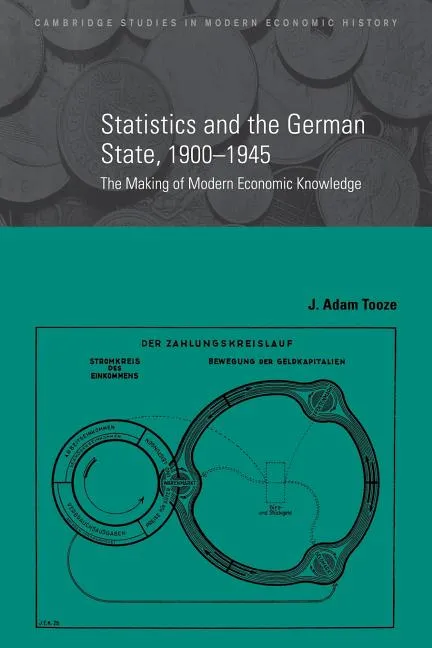
Tooze provides an interpretation of the period of dramatic statistical innovation between 1900 and 1945. The Weimar Republic and the Third Reich were in the forefront of statistical innovation in the interwar decades. New ways of measuring the economy were inspired both by contemporary developments in macroeconomic theory and the needs of government. Under the Nazi regime, these statistical tools provided the basis for a radical experiment in economic planning. Based on the German example, Tooze argues for a more wide-ranging reconsideration of the history of modern economic knowledge.
Adam Tooze
Adam Tooze is the Barton M. Biggs Professor of History and codirector of International Security Studies at Yale University. He won the 2002 Philip Leverhulme Prize for Modern History. His groundbreaking work The Wages of Destruction: The Making and Breaking of the Nazi Economy won the Wolfson Prize and the Longman Prize, was shortlisted for the Duff Cooper and H Soz Kult prizes, was an Economist book of the year, and has been translated into German, Italian, Portuguese, and Bulgarian. For thirteen years he was a member of the history faculty at the University of Cambridge. In 2009, he was appointed to the academic panel charged by the Bundesfinanzministerum (Federal Finance Ministry) with writing the ministry's history in the period of the Third Reich. He has responsibility for the volume dealing with public debt.
More by Adam Tooze



Why Readwise Books?
Readwise Books is an ebook & audiobook platform that automatically logs how much you and your friends read, making it fun and easy to read more. Learn more →