Report an issue
Tell us what's wrong and we'll take a look.
Thanks – we got it. We'll review and follow up if needed.
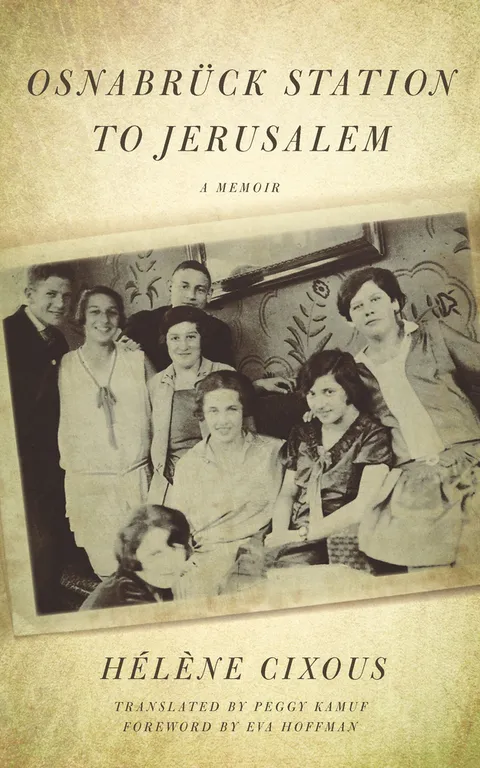
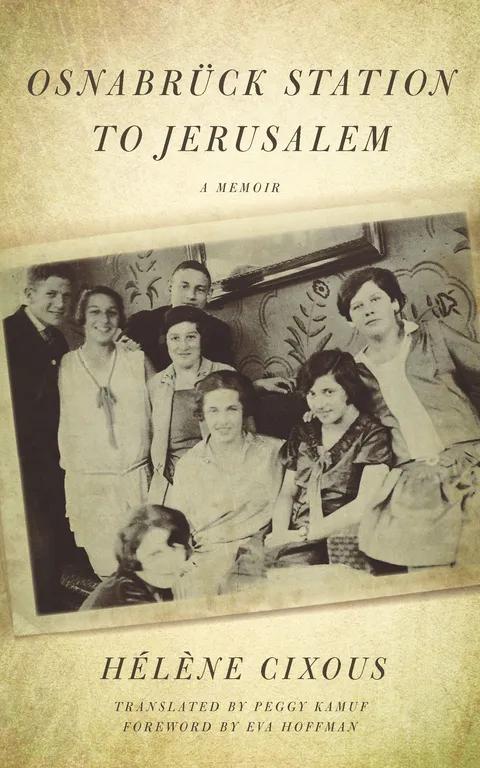
An inventive blend of memoir and family history that ponders those who didn't flee their German town in time: "Powerfully reclaimed—and imagined—reality." —The Jewish Chronicle Winner, French Voices Award for Excellence in Publication and Translation For about eighty years, the Jonas family of Osnabrück were part of a small but vibrant Jewish community in this mid-size city of Lower Saxony. After the war, Osnabrück counted not a single Jew. Most had been deported and murdered in the camps; others emigrated—if they could, and if they managed to overcome their own inertia. It is this inertia and failure to escape that Hélène Cixous seeks to account for in Osnabrück Station to Jerusalem. Vicious anti-Semitism hounded Osnabrück's Jews long before the Nazis' rise to power in 1933. So why did people wait to leave when the threat was so clear? Drawn from the stories told to Cixous by her mother, Ève, and grandmother, Rosalie (Rosi), this literary work reimagines fragments of Ève's and Rosi's stories, including the death of Ève's uncle, Onkel André. Piecing together the story of Andreas Jonas from what she was told and from what she envisions, Cixous recounts the tragedy of the one she calls the King Lear of Osnabrück, who followed his daughter to Jerusalem only to be sent away by her, returning to Osnabrück in time to be deported to a death camp. Cixous wanders the streets of the city she'd heard about all her life, digs into its archives, meets city officials, all the while wondering if she should have come. These reflections in the present are woven with scenes from her childhood in Algeria and the half-remembered, half-invented stories of the Jonas family, making Osnabrück Station to Jerusalem one of the author's most intensely engaging books. "An inventive literary account of Cixous's remarkable journey to her mother's birthplace and of the Jewish community of a German town that was wiped out in the Holocaust." —Literary Hub, "The Best of the University Presses" This work received the French Voices Award for excellence in publication and translation. French Voices is a program created and funded by the French Embassy in the United States and FACE (French American Cultural Exchange).
Hélène Cixous
Hélène Cixous is the founder of the first Women’s Studies program in France, at the University of Paris VIII. Since 1967, she has published more than fifty “fictions,” as well as numerous works of criticism on literature and many essays on the visual arts. She has long been a collaborator with Ariane Mnouchkine at the Théâtre du Soleil, and a number of her plays have been published. Her many books include Osnabrück Station to Jerusalem, "Coming to Writing" and Other Essays, and The Portable Cixous.
More by Hélène Cixous
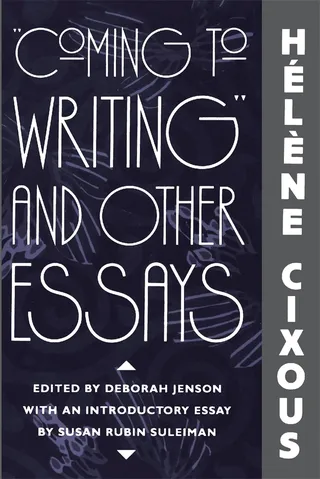
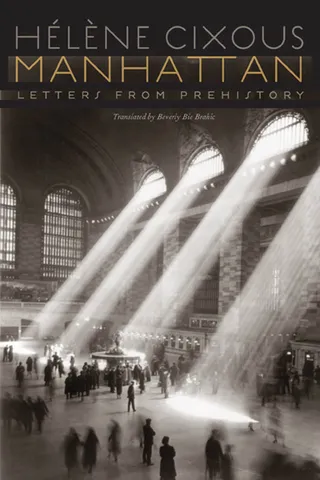




Peggy Kamuf
Translated by
Peggy Kamuf (PhD, French Literature, Cornell) is Marion Frances Chevalier Professor Emerita of French, Italian, and Comparative Literature at the University of Southern California. She is the author of Book of Addresses (Stanford, 2004), The Division of Literature: Or the University in Deconstruction (Chicago, 1997), Fictions of Feminine Desire (Nebraska, 1987), mSignature Pieces: On the Institution of Authorship (Cornell, 1988), and To Follow: The Wake of Jacques Derrida (Edinburgh, 2012) and the translator of a number of books by Jacques Derrida, Jean-Luc Nancy, and Helene Cixous, including A Derrida Reader: Between the Blinds (Columbia, 1991) and Artaud the Moma (Columbia, 2017). She is also a coeditor of The Seminars of Jacques Derrida (Chicago).


Why Readwise Books?
Readwise Books is an ebook & audiobook platform that automatically logs how much you and your friends read, making it fun and easy to read more. Learn more →