Report an issue
Tell us what's wrong and we'll take a look.
Thanks – we got it. We'll review and follow up if needed.
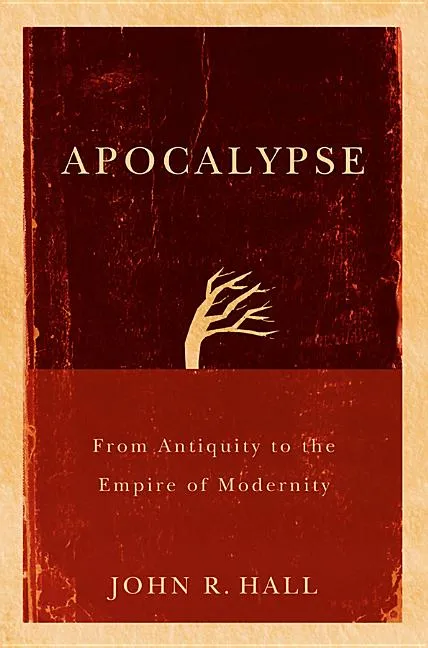
For most of us, "Apocalypse" suggests the cataclysmic end of the world. Yet in Greek "apocalypse" means "revelation," and the real subject of the Book of Revelation is how the sacred arises in history at a moment of crisis and destiny. With origins in ancient religions, the apocalyptic has been a transformative force from the time of the Crusades, through the Reformation, the French Revolution and modern communism, all the way to the present day "Islamic Jihad" and "War on Terror." In Apocalypse, John R. Hall explores the significance of apocalyptic movements and the role they have played in the rise of the West and "The Empire of Modernity."
This brilliant cross-disciplinary study offers a novel basis for rethinking our social order and its ambivalent relations to sacred history. Apocalypse will attract general readers seeking new understandings of the world in challenging times. Scholars and students will find a compelling synthesis that draws them into conversation with others interested in religion, theology, culture, philosophy, and phenomenology, as well as sociology, social theory, western civilization, and world history.
John R Hall
John R. Hall is director of the Center for History, Society, and Culture at the University of California, Davis and has also taught sociology at the University of Missouri, Columbia. He is the author of Apocalypse Observed: Religious Movements and Violence in North America, Europe, and Japan and The Ways Out: Utopian Communal Groups in an Age of Babylon.
More by John R Hall


Why Readwise Books?
Readwise Books is an ebook & audiobook platform that automatically logs how much you and your friends read, making it fun and easy to read more. Learn more →