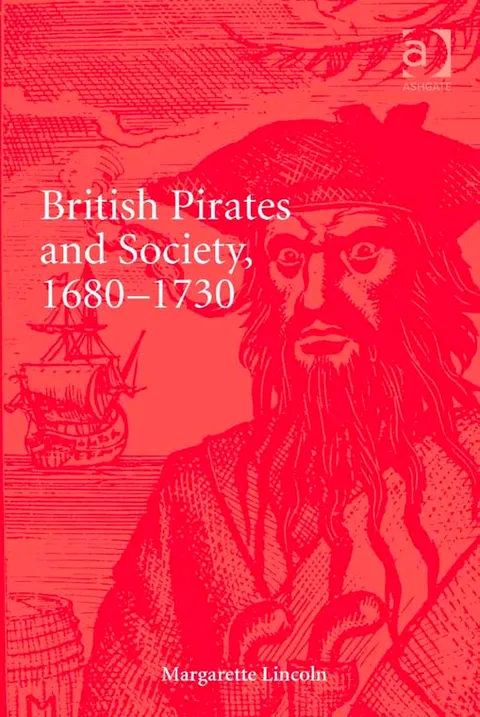
British Pirates and Society, 1680-1730
Report an issue
Tell us what's wrong and we'll take a look.
Thanks – we got it. We'll review and follow up if needed.
This book shows how pirates were portrayed in their own time, in trial reports, popular prints, novels, legal documents, sermons, ballads and newspaper accounts. It examines how attitudes towards them changed with Britain’s growing imperial power, exploring the interface between political ambition and personal greed, between civil liberties and the power of the state. It throws light on contemporary ideals of leadership and masculinity - some pirate voyages qualifying as feats of seamanship and endurance. Unusually, it also gives insights into the domestic life of pirates and investigates the experiences of women whose husbands turned pirate or were captured for piracy.
Pirate voyages contributed to British understanding of trans-oceanic navigation, patterns of trade and different peoples in remote parts of the world. This knowledge advanced imperial expansion and British control of trade routes, which helps to explain why contemporary attitudes towards piracy were often ambivalent.
This is an engaging study of vested interests and conflicting ideologies. It offers comparisons with our experience of piracy today and shows how the historic representation of pirate behaviour can illuminate other modern preoccupations, including gang culture.
Margarette Lincoln
Margarette Lincoln was a visiting researcher at the University of Portsmouth and is curator emerita of the National Maritime Museum. She is the author of numerous books, including London and the Seventeenth Century and Trading in War, which was shortlisted for the Wolfson Prize.
More by Margarette Lincoln



Why Readwise Books?
Readwise Books is an ebook & audiobook platform that automatically logs how much you and your friends read, making it fun and easy to read more. Learn more →