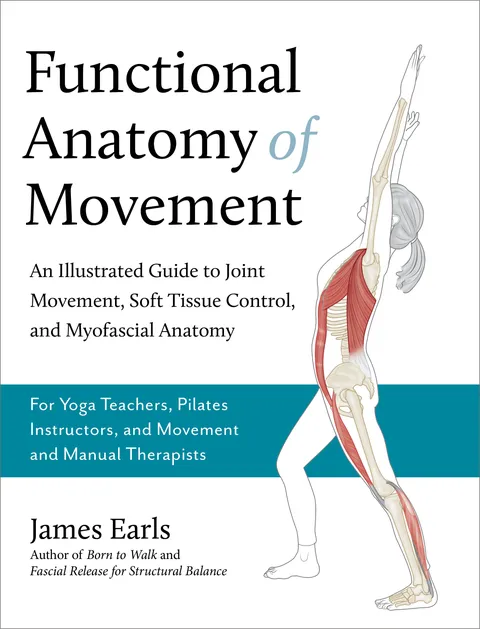
Functional Anatomy of Movement
An Illustrated Guide to Joint Movement, Soft Tissue Control, and Myofascial Anatomy-- For yoga teachers, pilates instructors & movement & manual therapists
Report an issue
Tell us what's wrong and we'll take a look.
Thanks – we got it. We'll review and follow up if needed.
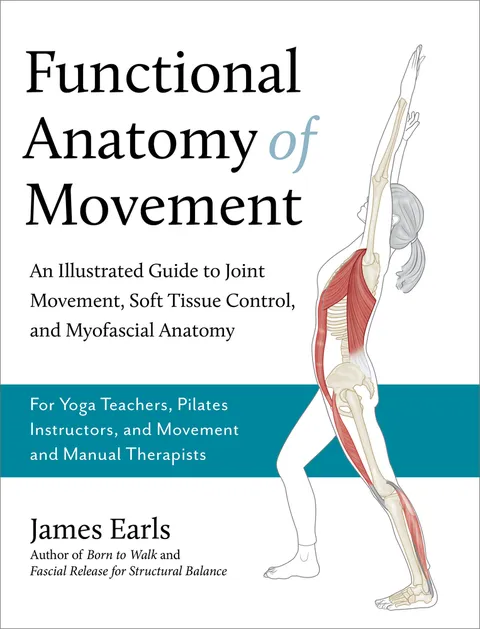
A unique and comprehensive approach to functional anatomy through the lens of myofascial continuities, from the coauthor of Fascial Release for Structural Balance
Whether we describe them as anatomy trains, myofascial chains, meridians, or slings—insights into the interconnected nature of fascial tissue have had a profound impact on our understanding of anatomy.
The concept of tensegrity—the idea that changes in tension may affect the whole body rather than just one part—has likewise opened up new appreciations for the complex and interdependent nature of real-world bodily movements. But musculoskeletal anatomy still tends to be taught in a drastically simplified fashion, through the study of fixed anatomical positions that do little to prepare us for the reality of actual movements.
In Functional Myofascial Anatomy, James Earls suggests that we need a new set of tools and vocabulary for watching and describing anatomy in motion. Earls argues that it is seeing movement in action—in different bodies and in different environments—that should inform our understanding of anatomy, rather than the other way around.
By situating the different theories and metaphors of myofascial continuities against the context of common real-life movements such as sports exercises and yoga asanas, Earls explains how each theoretical system may be useful in different situations and applicable to different issues.
Using up-to-date research, Earls digs into important questions for physical and manual therapists: which tissues really are contiguous? Does continuity of tissue actually show or demonstrate transmission of force and communication along those lines? And does fascial tissue have to be continuous for the body to actually transfer force?
Accessibly written and fully illustrated, Functional Myofascial Anatomy offers practical applications for physical therapists, chiropractors, and bodyworkers, as well as new tools for teachers of yoga and pilates to develop a deeper understanding of anatomy and movement.
James Earls
James Earls is a Structural Integration practitioner and manual therapist with decades of experience. He holds diplomas in various forms of bodywork and a BA(Hons) in Psychology and an MSc in Human Anatomy & Evolution. James lectures regularly worldwide and was a founder of the annual Evolution101 Summit in London. He has written widely. As well as writing for Massage World, Today's Therapist, the journal of the International Association of Structural Integrators and 'In Touch', James has authored four books with Lotus/North Atlantic Books: Fascial Release for Structural Balance (2 ed); Born to Walk - Myofascial Efficiency and the Body in Movement (2ed ); Understanding
the Human Foot; and Functional Anatomy of Movement - all published by Lotus/North Atlantic. He has also authored a portion on movement for Thomas Myers' Anatomy Trains (3rd & 4th eds), and was invited to write a chapter on gait for the second edition of Fascia in Sports and Movement (Handspring), and contributed to Lauri Nemetz's recent title The Myofascial System in Form and Movement (Handspring). Whilst not currently serving on any board he has been involved with the International Association of Structural Integrators, the Sports Massage Association (UK), the Institute of Sports and Remedial Massage (UK), and the Association of Physical and Natural Therapists. James has extensive teaching experience, teaching about fascia, functional anatomy, and movement.
More by James Earls


Why Readwise Books?
Readwise Books is an ebook & audiobook platform that automatically logs how much you and your friends read, making it fun and easy to read more. Learn more →