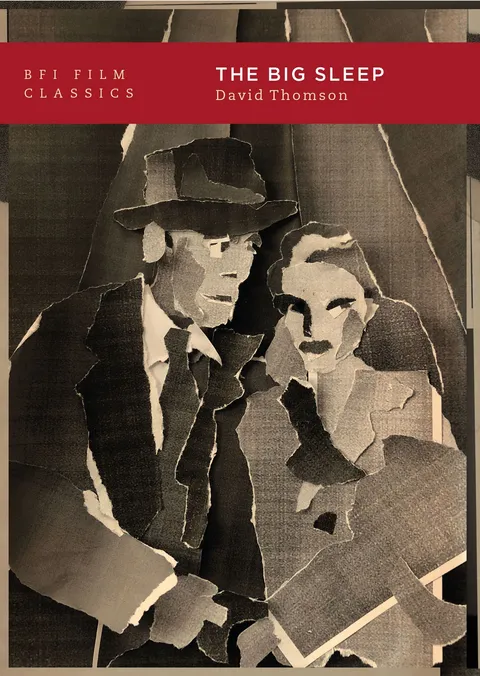
The Big Sleep
Report an issue
Tell us what's wrong and we'll take a look.
Thanks – we got it. We'll review and follow up if needed.
The Big Sleep: Marlowe and Vivian practising kissing; General Sternwood shivering in a hothouse full of orchids; a screenplay, co-written by Faulkner, famously mysterious and difficult to solve. Released in 1946, Howard Hawks' adaptation of Raymond Chandler reunited Bogart and Bacall and gave them two of their most famous roles. The mercurial but ever-manipulative Hawks dredged humour and happiness out of film noir. 'Give him a story about more murders than anyone can keep up with, or explain,' David Thomson writes in his compelling study of the film, 'and somehow he made a paradise.'
When it was first shown to a military audience The Big Sleep was coldly received. So, as Thomson reveals, Hawks shot extra scenes, 'fun' scenes, to replace one in which the film's murders had been explained, and in so doing left the plot unresolved. Thomson argues that, if this was accidental, it also signalled a change in the nature of Hollywood cinema: 'The Big Sleep inaugurates a post-modern, camp, satirical view of movies being about other movies that extends to the New Wave and Pulp Fiction.'
David Thomson
David Thomson is the author of more than twenty books, including biographies of David O. Selznick and Orson Welles, and The New Biographical Dictionary of Film. His writing and his books have been featured in The New York Times, The Guardian, the Los Angeles Times, The Atlantic, Esquire, Slate, and many more. He lives in San Francisco.
More by David Thomson


Why Readwise Books?
Readwise Books is an ebook & audiobook platform that automatically logs how much you and your friends read, making it fun and easy to read more. Learn more →