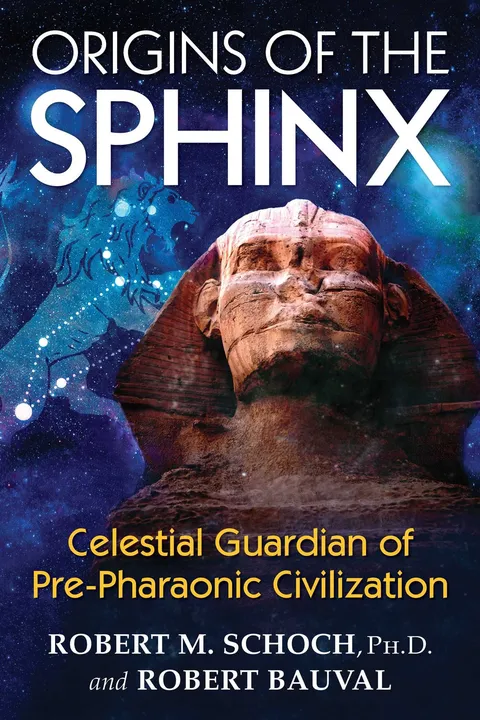
Origins of the Sphinx
Celestial Guardian of Pre-Pharaonic Civilization
Report an issue
Tell us what's wrong and we'll take a look.
Thanks – we got it. We'll review and follow up if needed.
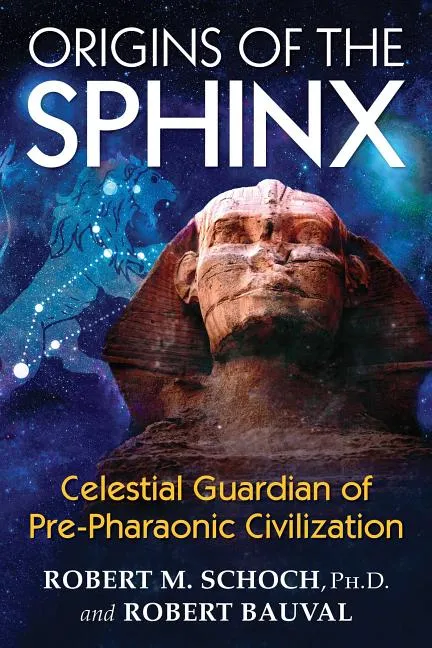
New research and evidence that the Sphinx is thousands of years older than previously thought
• Contrasts what Egyptologists claim about the Sphinx with historical accounts and new research including reanalysis of seismic studies and updates to Schoch’s water weathering research and Bauval’s Orion Correlation Theory
• Examines how the Sphinx is contemporaneous with Göbekli Tepe, aligned with the constellation Leo, and was recarved during the Old Kingdom era of Egypt
• Reveals that the Sphinx was built during the actual historical Golden Age of ancient Egypt, the period known in legend as Zep Tepi
No other monument in the world evokes mystery like the Great Sphinx of Giza. It has survived the harsh climate of Egypt for thousands of years and will remain long after our own civilization is gone. According to orthodox Egyptology, the Sphinx was built around 2500 BCE as a memorial to the pharaoh Khafre. Yet this “fact” has scant to no supportive evidence. When was the Sphinx really built and, most importantly, why?
In this provocative collaboration from two Egyptology outsiders, Robert M. Schoch, Ph.D., and Robert Bauval combine their decades of research to show how the Sphinx is thousands of years older than the conventional Egyptological timeline and was built by a long forgotten pre-Pharaonic civilization. They examine the known history of the Sphinx, contrasting what Egyptologists claim with prominent historical accounts and new research, including updates to Schoch’s geological water weathering research and reanalysis of seismic studies. Building on Bauval’s Orion Correlation Theory, they investigate the archaeoastronomical alignments of the monuments of the Giza Plateau and reveal how the pyramids and Sphinx were built to align with the constellations of Orion and Leo. Analyzing the evidence for a significantly older construction phase at Giza and the restoration and recarving of the Sphinx during the Old Kingdom era, they assert that the Sphinx was first built by an advanced pre-Pharaonic civilization that existed circa 12,000 years ago on the Giza Plateau, contemporaneous with the sophisticated Göbekli Tepe complex.
The authors examine how the monuments at Giza memorialize Zep Tepi, the Golden Age of legend shown here to be an actual historical time period from roughly 10,500 BCE through 9700 BCE. Moving us closer to an understanding of the true age and purpose of the Great Sphinx, Schoch and Bauval provide evidence of an early high civilization witnessed by the Great Sphinx before the end of the last ice age.




Robert Bauval
Egyptian-born Robert Bauval began studying ancient Egypt and the Giza Pyramids in 1983. The acclaimed discoverer of the Orion Correlation Theory, he is the author of several books, including Breaking the Mirror of Heaven, The Vatican Heresy, and the bestsellers The Orion Mystery and Message of the Sphinx. His discoveries have been the subject of several major TV documentaries on BBC, ABC, NBC, the Discovery Channel, and the History Channel.
More by Robert Bauval





Why Readwise Books?
Readwise Books is an ebook & audiobook platform that automatically logs how much you and your friends read, making it fun and easy to read more. Learn more →