Report an issue
Tell us what's wrong and we'll take a look.
Thanks – we got it. We'll review and follow up if needed.
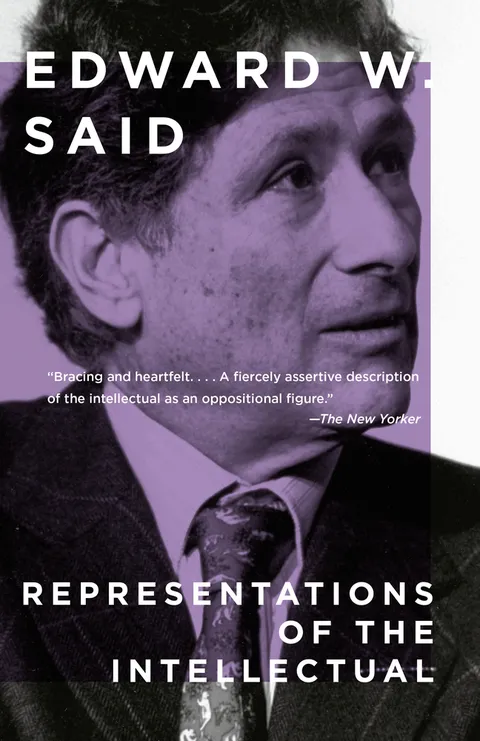
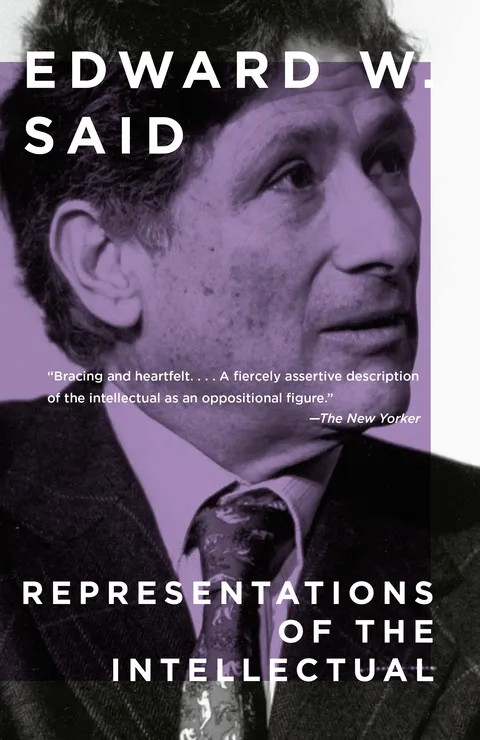
In these impassioned and inspiring essays, based on his 1993 Reith Lectures, Edward Said explores what it means to be an intellectual.
"Said is a brilliant and unique amalgam of scholar, aesthete and political activist. . . . He challenges and stimulates our thinking in every area." --Washington Post Book World
Are intellectuals merely the servants of special interests or do they have a larger responsibility? In these wide-ranging essays, one of our most brilliant and fiercely independent public thinkers addresses this question with extraordinary eloquence. Said sees the the intellectual as an exile and amateur whose role it is "to speak the truth to power" even at the risk of ostracism or imprisonment. Drawing on the examples of Jonathan Swift and Theodor Adorno, Robert Oppenheimer and Henry Kissinger, Vietnam and the Gulf War, Said explores the implications of this idea and shows what happens when intellectuals succumb to the lures of money, power, or specialization.
Edward W. Said
Edward W. Said (1935-2003) was University Professor of English and Comparative Literature at Columbia. A member of the American Academy of Arts and Sciences, the Royal Society of Literature and of Kings College Cambridge, his celebrated works include Orientalism, The End of the Peace Process, Power, Politics and Culture, and the memoir Out of Place. He is also the editor, with Christopher Hitchens, of Blaming the Victims, published by Verso. New Left Review published an obituary in Nov-Dec 2003: http://www.newleftreview.org/?view=2481
More by Edward W. Said


Why Readwise Books?
Readwise Books is an ebook & audiobook platform that automatically logs how much you and your friends read, making it fun and easy to read more. Learn more →