Report an issue
Tell us what's wrong and we'll take a look.
Thanks – we got it. We'll review and follow up if needed.
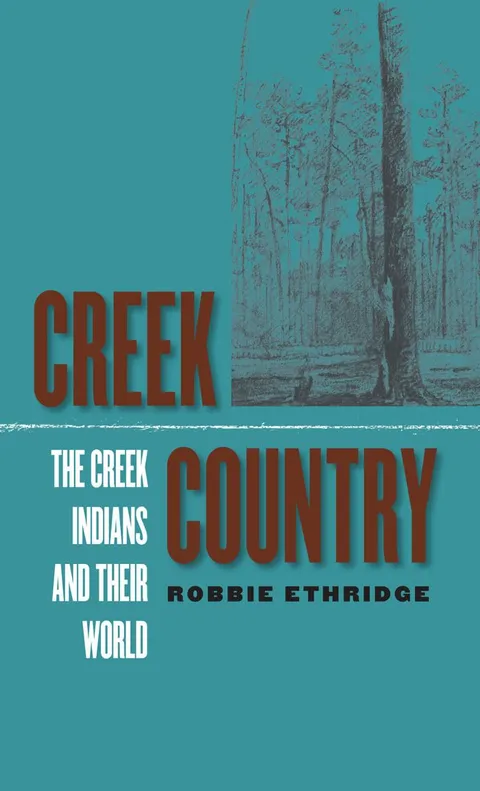
Reconstructing the human and natural environment of the Creek Indians in frontier Georgia, Mississippi, Alabama, and Tennessee, Robbie Ethridge illuminates a time of wrenching transition. Creek Country presents a compelling portrait of a culture in crisis, of its resiliency in the face of profound change, and of the forces that pushed it into decisive, destructive conflict.
Ethridge begins in 1796 with the arrival of U.S. Indian Agent Benjamin Hawkins, whose tenure among the Creeks coincided with a period of increased federal intervention in tribal affairs, growing tension between Indians and non-Indians, and pronounced strife within the tribe. In a detailed description of Creek town life, the author reveals how social structures were stretched to accommodate increased engagement with whites and blacks. The Creek economy, long linked to the outside world through the deerskin trade, had begun to fail. Ethridge details the Creeks' efforts to diversify their economy, especially through experimental farming and ranching, and the ecological crisis that ensued. Disputes within the tribe culminated in the Red Stick War, a civil war among Creeks that quickly spilled over into conflict between Indians and white settlers and was ultimately used by U.S. authorities to justify their policy of Indian removal.
Robbie Ethridge
Robbie Ethridge, professor of anthropology at the University of Mississippi, is the author of From Chicaza to Chickasaw: The European Invasion and the Transformation of the Mississippian World, 1540-1715.
More by Robbie Ethridge


Why Readwise Books?
Readwise Books is an ebook & audiobook platform that automatically logs how much you and your friends read, making it fun and easy to read more. Learn more →