Report an issue
Tell us what's wrong and we'll take a look.
Thanks – we got it. We'll review and follow up if needed.
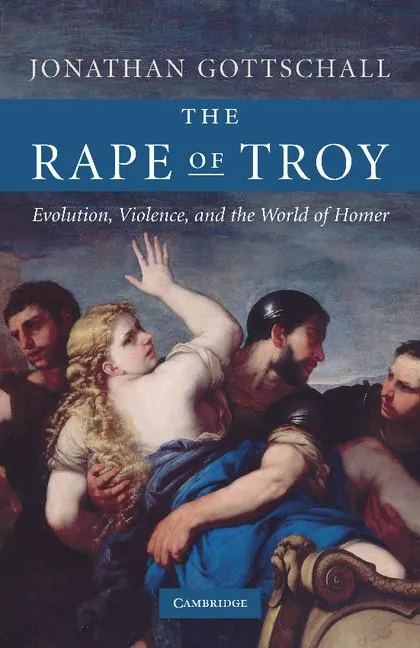
Homer's epics reflect an eighth-century BCE world of warrior tribes that were fractured by constant strife; aside from its fantastic scale, nothing is exceptional about Troy's conquest by the Greeks. Using a fascinating and innovative approach, Professor Gottschall analyses Homeric conflict from the perspective of modern evolutionary biology, attributing its intensity to a shortage of available young women. The warrior practice of taking enemy women as slaves and concubines meant that women were concentrated in the households of powerful men. In turn, this shortage drove men to compete fiercely over women: almost all the main conflicts of the Iliad and Odyssey can be traced back to disputes over women. The Rape of Troy integrates biological and humanistic understanding - biological theory is used to explore the ultimate sources of pitched Homeric conflict, and Homeric society is the subject of a bio-anthropological case study of why men fight.
Jonathan Gottschall
JONATHAN GOTTSCHALL teaches English at Washington & Jefferson College and is one of the leading figures in the movement toward a more scientific humanities. The author or editor of five scholarly books as well as The Storytelling Animal and The Professor in the Cage, Gottschall's work has been prominently featured in The New York Times Magazine, Scientific American, and The Chronicle of Higher Education, among others. Steven Pinker has called him "a brilliant young scholar" whose writing is "unfailingly clear, witty, and exciting."
More by Jonathan Gottschall




Why Readwise Books?
Readwise Books is an ebook & audiobook platform that automatically logs how much you and your friends read, making it fun and easy to read more. Learn more →