Intentions
Report an issue
Tell us what's wrong and we'll take a look.
Thanks – we got it. We'll review and follow up if needed.
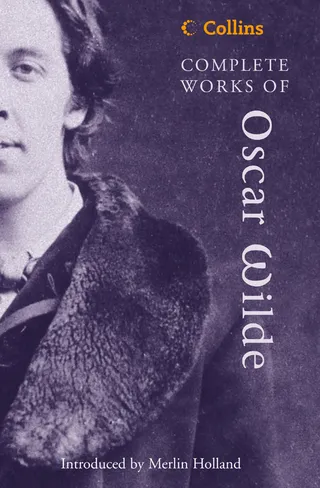
Originally published in 1891 when Wilde was at the height of his form, these brilliant essays on art, literature, criticism, and society display the flamboyant poseur's famous wit and wide learning. A leading spokesman for the English Aesthetic movement, Wilde promoted "art for art's sake" against critics who argued that art must serve a moral purpose. On every page of this collection the gifted literary stylist admirably demonstrates not only that the characteristics of art are "distinction, charm, beauty, and imaginative power," but also that criticism itself can be raised to an art form possessing these very qualities. In the opening essay, Wilde laments the "decay of Lying as an art, a science, and a social pleasure." He takes to task modern literary realists like Henry James and Emile Zola for their "monstrous worship of facts" and stifling of the imagination. What makes art wonderful, he says, is that it is "absolutely indifferent to fact, [art] invents, imagines, dreams, and keeps between herself and reality the impenetrable barrier of beautiful style, of decorative or ideal treatment." The next essay, "Pen, Pencil, and Poison," is a fascinating literary appreciation of the life of Thomas Griffiths Wainewright, a talented painter, art critic, antiquarian, friend of Charles Lamb, and — murderer. The heart of the collection is the long two-part essay titled "The Critic as Artist." In one memorable passage after another, Wilde goes to great lengths to show that the critic is every bit as much an artist as the artist himself, in some cases more so. A good critic is like a virtuoso interpreter: "When Rubinstein plays ... he gives us not merely Beethoven, but also himself, and so gives us Beethoven absolutely...made vivid and wonderful to us by a new and intense personality. When a great actor plays Shakespeare we have the same experience." Finally, in "The Truth of Masks," Wilde returns to the theme of art as artifice and creative deception. This essay focuses on the use of masks, disguises, and costume in Shakespeare. For newcomers to Wilde and those who already know his famous plays and fiction, this superb collection of his criticism offers many delights.
Oscar Wilde
Oscar Fingal O'Flahertie Wills Wilde (b. Dublin, 1854) was an Irish playwright, who wrote one of the best loved comedies in the English language - The Importance of Being Earnest (1895). A leading wit and conversationalist in London society, his career was destroyed at its height when he was imprisoned for homosexual offences. Wilde was born in Dublin and educated at Trinity College, Dublin, and Magdalen College, Oxford. Settling in London, he became famous for his extravagant dress, long hair, and paradoxical views on art, literature, and morality. His first play, Vera (1880), a tragedy about Russian nihilists, was produced in New York to poor reviews. Success in the theatre came with the elegant drawing-room comedy Lady Windermere's Fan. A Woman of No Importance (1893) was another success. Other works for the theatre were An Ideal Husband (1895) and the biblical Salomé (1896), written in French for Sarah Bernhardt. Wilde flaunted his homosexual affairs, including his ill-fated liaison with Lord Alfred Douglas. Following a celebrated trial in 1895 he was sentenced to two years' imprisonment with hard labour. The sentence led to public humiliation, poor health, and bankruptcy. On his release in 1897 he left for France and remained in exile there until his death in 1900.
More by Oscar Wilde



Why Readwise Books?
Readwise Books is an ebook & audiobook platform that automatically logs how much you and your friends read, making it fun and easy to read more. Learn more →