Report an issue
Tell us what's wrong and we'll take a look.
Thanks – we got it. We'll review and follow up if needed.
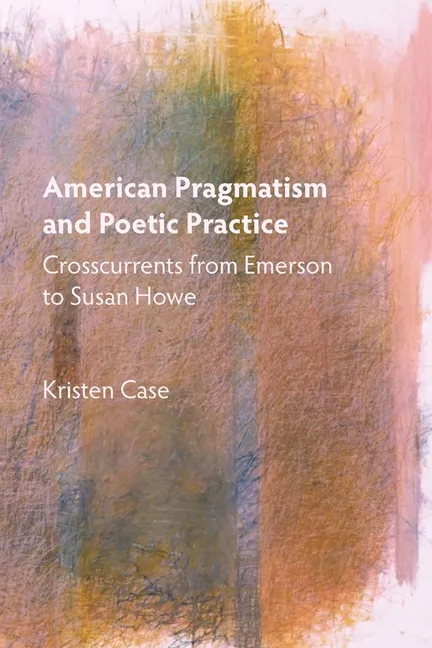
Wittgenstein wrote that "philosophy ought really to be written only as a form of poetry." American poetry has long engaged questions about subject and object, self and environment, reality and imagination, real and ideal that have dominated the Western philosophical tradition since the Enlightenment. Kristen Case's book argues that American poets from Emerson to Susan Howe have responded to the central problems of Western philosophy by performing, in language, the continually shifting relation between mind and world. Pragmatism, recognizing the futility of philosophy's attempt to fix the mind/world relation, announces the insights that these poets enact.
Pursuing the flightsof pragmatist thinking into poetry and poetics, Case traces an epistemology that emerges from American writing, including that of Emerson, Marianne Moore, William James, and Charles Olson. Here mind and world are understood as inseparable, and the human being is regarded as, in Thoreau's terms, "part and parcel of Nature." Case presents a new picture of twentieth-century American poetry that disrupts our sense of the schools and lineages of modern and postmodern poetics, arguing that literary history is most accurately figured as a living field rather than a line. This book will be of particular interest to scholars and students of pragmatism, transcendentalism, and twentieth-century American poetry.
Kristen Case is Assistant Professor of English at the University of Maine at Farmington.


Why Readwise Books?
Readwise Books is an ebook & audiobook platform that automatically logs how much you and your friends read, making it fun and easy to read more. Learn more →