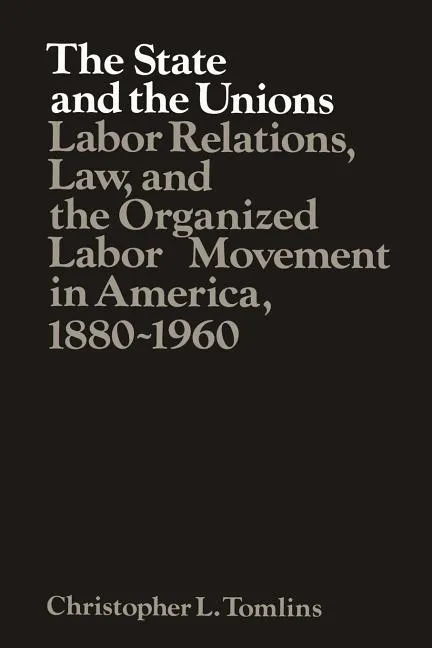
The State and the Unions
Report an issue
Tell us what's wrong and we'll take a look.
Thanks – we got it. We'll review and follow up if needed.
This book was first published in 1985. The enactment of the Wagner National Labor Relations Act in 1935 gave organized labor what it has regarded ever since as one of its greatest assets: a legislative guarantee of the right of American workers to organize and bargain collectively. Yet while the Wagner Act's guarantees remain substantially unaltered, organized labor in America today is in decline. Addressing this apparent paradox, Tomlins offers an examination of the impact of the National Labor Relations Act on American unions. By studying the intentions of policy makers in the context of the development of labor law from the late nineteenth century, and by looking at the course of labor history since the act's passage, Tomlins shows how public policy has been shaped to confine labor's role in the American economy. If unions want a cure for their contemporary malaise, he concludes, they must recognize that many of their problems stem from the laws which purport to protect them.
Christopher L Tomlins
Christopher L. Tomlins is a senior research fellow at the American Bar Foundation in Chicago.
More by Christopher L Tomlins


Why Readwise Books?
Readwise Books is an ebook & audiobook platform that automatically logs how much you and your friends read, making it fun and easy to read more. Learn more →