
Logic as the Question Concerning the Essence of Language
Report an issue
Tell us what's wrong and we'll take a look.
Thanks – we got it. We'll review and follow up if needed.
Aims to transform logic into a reflection on the nature of language.
This first English translation of Logik als die Frage nach dem Wesen der Sprache, volume 38 of Martin Heidegger's Gesamtausgabe, contains novel ideas on logic and language that are important for anyone wishing to think beyond traditional views of these topics. Based on student transcripts of Heidegger's lectures and manuscripts for a 1934 summer course, the work contains his first public reflection on the nature of language itself. Given shortly after Heidegger's resignation to the rectorship of the University of Freiburg, the course also opens up fresh perspectives on his controversial involvement with the Nazi regime. Heidegger's critical probing of logic involves metaphysics and poetry and intertwines essential questions concerning language as a world-forming power, the human being, history, and time. This work marks a milestone in Heidegger's path of thinking as his first meditation on language as a primal event of being.
Martin Heidegger
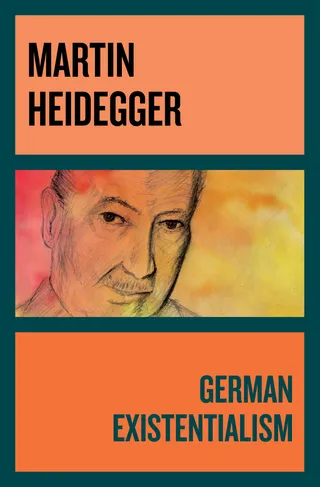
Heidegger’s contribution to the growth and development of National Socialism was immense. In this small anthology, Dr. Runes endeavors to point to the utter confusion Heidegger created by drawing, for political and social application of his own existentialism and metaphysics, upon the decadent and repulsive brutalization of Hitlerism. Martin Heidegger was a philosopher most known for his contributions to German phenomenological and existential thought. Heidegger was born in rural Messkirch in 1889 to Catholic parents. While studying philosophy and mathematics at Albert-Ludwig University in Freiburg, Heidegger became the assistant for the philosopher Edmund Husserl. Influenced by Husserl, Kierkegaard, and Nietzsche, Heidegger wrote extensively on the quality of Being, including his Opus Being and Time. He served as professor of philosophy at Albert-Ludwig University and taught there during the war. In 1933, Heidegger joined the National Socialist German Worker’s (or Nazi) Party and expressed his support for Hitler in several articles and speeches. After the war, his support for the Nazi party came under attack, and he was tried as a sympathizer. He was able to return to Albert Ludwig University, however, and taught there until he retired. Heidegger continued to lecture until his death in 1973.
More by Martin Heidegger







Why Readwise Books?
Readwise Books is an ebook & audiobook platform that automatically logs how much you and your friends read, making it fun and easy to read more. Learn more →