The Note Book of Elbert Hubbard
Mottoes, Epigrams, Short Essays, Passages, Orphic Sayings and Preachments
Report an issue
Tell us what's wrong and we'll take a look.
Thanks – we got it. We'll review and follow up if needed.
"The Note Book of Elbert Hubbard" is a comprehensive collection of the profound insights, witty epigrams, and spirited short essays of one of America's most influential thinkers and key figures of the Arts and Crafts movement. Gathered posthumously, this work serves as a testament to Hubbard's unique philosophy, emphasizing the beauty of labor, the power of individual initiative, and the pursuit of a meaningful life.
The volume contains a diverse array of mottoes, orphic sayings, and "preachments" that capture the iconoclastic spirit and distinctive voice of the man known to many as "Fra Elbertus." From brief, punchy observations on human nature to longer meditations on art, business, and character, the entries reflect a lifetime of observation and a relentless commitment to self-improvement. Readers will find a wealth of wisdom regarding the virtues of hard work and the follies of modern society.
This collection remains a vital resource for those seeking inspiration and practical wisdom. It showcases Hubbard's mastery of the English language and his skill in distilling complex ethical and social ideas into memorable, accessible prose. "The Note Book of Elbert Hubbard" continues to resonate as a timeless reflection on the human condition and the enduring pursuit of excellence.
This work has been selected by scholars as being culturally important, and is part of the knowledge base of civilization as we know it. This work was reproduced from the original artifact, and remains as true to the original work as possible. Therefore, you may see the original copyright references, library stamps (as most of these works have been housed in our most important libraries around the world), and other notations in the work.
This work is in the public domain in the United States of America, and possibly other nations. Within the United States, you may freely copy and distribute this work, as no entity (individual or corporate) has a copyright on the body of the work.
As a reproduction of a historical artifact, this work may contain missing or blurred pages, poor pictures, errant marks, etc. Scholars believe, and we concur, that this work is important enough to be preserved, reproduced, and made generally available to the public. We appreciate your support of the preservation process, and thank you for being an important part of keeping this knowledge alive and relevant.
Elbert Hubbard
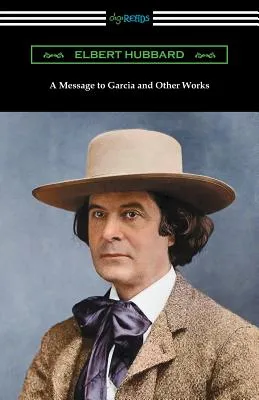
Elbert Green Hubbard was an American author, editor, artist, and philosopher who was born June 19, 1856, and died May 7, 1915. He was born in Hudson, Illinois, and did well as a traveling salesman for the Larkin Soap Company when he was young. Most people know Hubbard as the person who started the Roycroft artisan village in East Aurora, New York. Roycroft was a major part of the Arts and Crafts movement. Some of the many things Hubbard wrote were Little Journeys to the Homes of the Great, which was published in fourteen volumes, and A Message to Garcia, a short story. The RMS Lusitania sank off the coast of Ireland on May 7, 1915, by a German submarine. He and his second wife, Alice Moore Hubbard, were on board. In 1856, Silas Hubbard and Juliana Frances Read had a child named Hubbard. He was born in Bloomington, Illinois. In the fall of 1855, his parents moved from Buffalo, New York, where his father worked as a doctor, to Bloomington. Silas moved his family to Hudson, Illinois the next year because he was having a hard time settling down in Bloomington, where there were already a lot of well-known doctors.
More by Elbert Hubbard






Why Readwise Books?
Readwise Books is an ebook & audiobook platform that automatically logs how much you and your friends read, making it fun and easy to read more. Learn more →