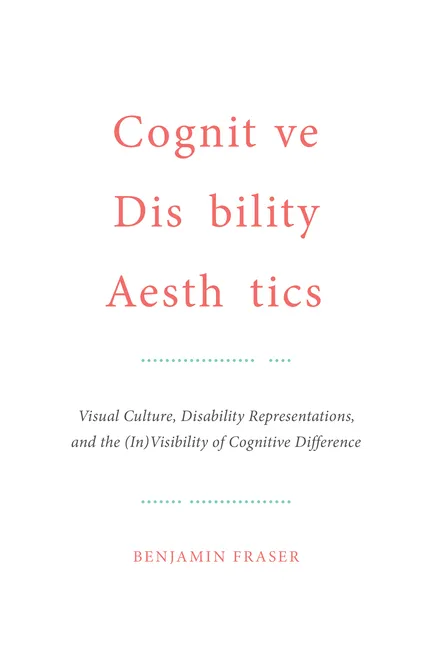
Cognitive Disability Aesthetics
Visual Culture, Disability Representations, and the (In)Visibility of Cognitive Difference
Report an issue
Tell us what's wrong and we'll take a look.
Thanks – we got it. We'll review and follow up if needed.
Cognitive Disability Aesthetics explores the invisibility of cognitive disability in theoretical, historical, social, and cultural contexts. Benjamin Fraser's cutting edge research and analysis signals a second-wave in disability studies that prioritizes cognition. Fraser expands upon previous research into physical disability representations and focuses on those disabilities that tend to be least visible in society (autism, Down syndrome, Alzheimer's disease, schizophrenia). Moving beyond established literary approaches analyzing prose representations of disability, the book explores how iconic and indexical modes of signification operate in visual texts. Taking on cognitive disability representations in a range of visual media (painting, cinema, and graphic novels), Fraser showcases the value of returning to impairment discourse. Cognitive Disability Aesthetics successfully reconfigures disability studies in the humanities and exposes the chasm that exists between Anglophone disability studies and disability studies in the Hispanic world.
Benjamin Fraser
Benjamin Fraser is Professor of Iberian Studies at the University of Arizona. He is the author of many books, including The Art of Pere Joan: Space, Landscape, and Comics Form and Visible Cities, Global Comics: Urban Images and Spatial Form.
More by Benjamin Fraser












Why Readwise Books?
Readwise Books is an ebook & audiobook platform that automatically logs how much you and your friends read, making it fun and easy to read more. Learn more →