Report an issue
Tell us what's wrong and we'll take a look.
Thanks – we got it. We'll review and follow up if needed.
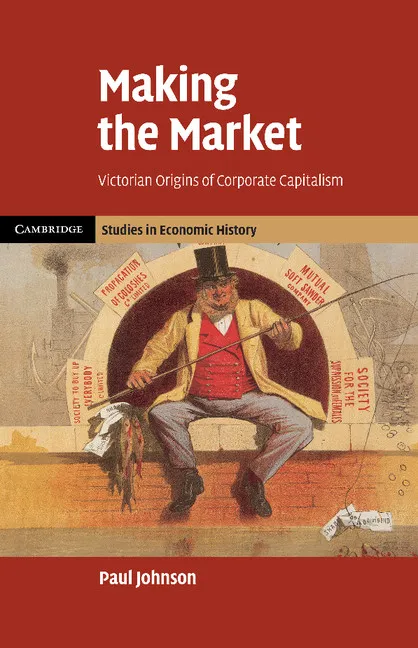
Corporate capitalism was invented in nineteenth-century Britain; most of the market institutions that we take for granted today - limited companies, shares, stock markets, accountants, financial newspapers - were Victorian creations. So were the moral codes, the behavioural assumptions, the rules of thumb and the unspoken agreements that made this market structure work. This innovative study provides the first integrated analysis of the origin of these formative capitalist institutions, and reveals why they were conceived and how they were constructed. It explores the moral, economic and legal assumptions that supported this formal institutional structure, and which continue to shape the corporate economy of today. Tracing the institutional growth of the corporate economy in Victorian Britain and demonstrating that many of the perceived problems of modern capitalism - financial fraud, reckless speculation, excessive remuneration - have clear historical precedents, this is a major contribution to the economic history of modern Britain.
Paul Johnson
Paul Johnson is a historian whose work ranges over the millennia and the whole gamut of human activities. He regularly writes book reviews for several UK magazines and newspapers, such as the Literary Review and The Spectator, and he lectures around the world. He lives in London, England.
More by Paul Johnson







Why Readwise Books?
Readwise Books is an ebook & audiobook platform that automatically logs how much you and your friends read, making it fun and easy to read more. Learn more →