Man and Superman
Report an issue
Tell us what's wrong and we'll take a look.
Thanks – we got it. We'll review and follow up if needed.
You once asked me why I did not write a Don Juan play. The levity with which you assumed this frightful responsibility has probably by this time enabled you to forget it; but the day of reckoning has arrived: here is your play! I say your play, because qui facit per alium facit per se. Its profits, like its labor, belong to me: its morals, its manners, its philosophy, its influence on the young, are for you to justify. You were of mature age when you made the suggestion; and you knew your man. It is hardly fifteen years since, as twin pioneers of the New Journalism of that time, we two, cradled in the same new sheets, made an epoch in the criticism of the theatre and the opera house by making it a pretext for a propaganda of our own views of life. So you cannot plead ignorance of the character of the force you set in motion. You meant me to epater le bourgeois; and if he protests, I hereby refer him to you as the accountable party. I warn you that if you attempt to repudiate your responsibility, I shall suspect you of finding the play too decorous for your taste. The fifteen years have made me older and graver. In you I can detect no such becoming change. Your levities and audacities are like the loves and comforts prayed for by Desdemona: they increase, even as your days do grow. No mere pioneering journal dares meddle with them now: the stately Times itself is alone sufficiently above suspicion to act as your chaperone; and even the Times must sometimes thank its stars that new plays are not produced every day, since after each such event its gravity is compromised, its platitude turned to epigram, its portentousness to wit, its propriety to elegance, and even its decorum into naughtiness by criticisms which the traditions of the paper do not allow you to sign at the end, but which you take care to sign with the most extravagant flourishes between the lines. I am not sure that this is not a portent of Revolution. In eighteenth century France the end was at hand when men bought the Encyclopedia and found Diderot there. When I buy the Times and find you there, my prophetic ear catches a rattle of twentieth century tumbrils.
Bernard Shaw
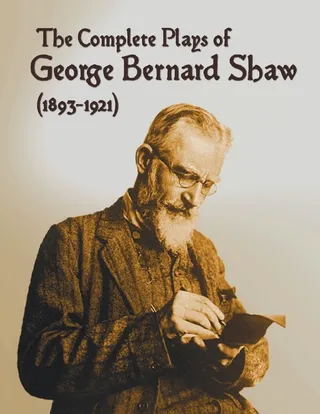
From 26 July 1856 to 2 November 1950, Irish playwright, critic, polemicist, and political activist George Bernard Shaw was alive. He preferred to be referred to simply as Bernard Shaw. From the 1880s until his death and even after, he had a significant impact on Western politics, theater, and society. He produced more than sixty plays, including classics like Saint Joan (1913), Pygmalion (1913), and Man and Superman (1902). (1923). Shaw became a well-known playwright during his time and was awarded the Nobel Prize in literature in 1925 for his works that combine historical allegory and contemporary satire. Before Shaw's first play, Arms and the Man, published in 1894, became a success in the public eye, years passed. He tried to infuse new realism into English-language drama, influenced by Henrik Ibsen. He had established himself as a reputable theater and music critic by the mid-1880s. After having a political awakening, he joined the gradualist Fabian Society and swiftly advanced to the position of principal pamphleteer. Before Shaw's first play, Arms and the Man, published in 1894, became a success in the public eye, years passed. He tried to infuse new realism into English-language drama, influenced by Henrik Ibsen.
More by Bernard Shaw





Why Readwise Books?
Readwise Books is an ebook & audiobook platform that automatically logs how much you and your friends read, making it fun and easy to read more. Learn more →