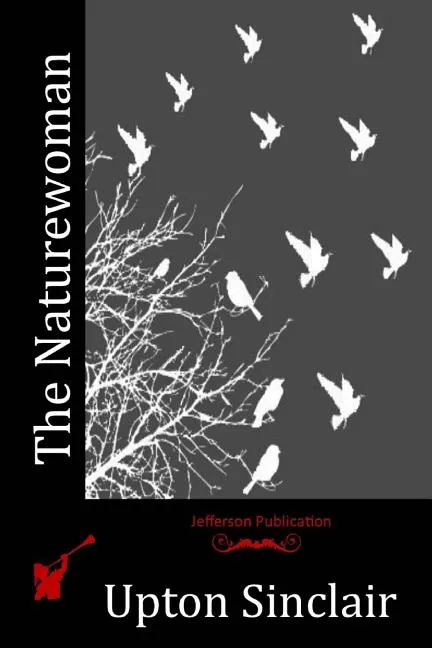
The Naturewoman
Report an issue
Tell us what's wrong and we'll take a look.
Thanks – we got it. We'll review and follow up if needed.
"[...]Centre table; windows left, and chairs.] [At rise: ETHEL standing by table; a beautiful but rather frail girl of sixteen; opening a package containing photograph in frame.] ETHEL. Oceana! Oceana! [She gazes at it in rapture.] Oh, I wonder if she'll be as good as she is beautiful! She must be! Oceana! [To REMSON, an old, white-haired family servant, who enters with flowers in vase.] No message from my brother yet? REMSON. Nothing, Miss Ethel. ETHEL. Look at this, Remson. REMSON. [Takes photograph.] Is that your cousin, Miss Ethel? ETHEL. That's she. Isn't she lovely? REMSON. Yes, miss. Is that the way they dress in those parts? ETHEL. The natives don't even wear that much, Remson. REMSON. It must be right warm there, I fancy. ETHEL. Oh, yes... they never know what cold weather is. REMSON. What is the name of it, Miss Ethel? ETHEL. Maukuri-it's in the South Seas. REMSON. It seems like I've heard of cannibals in those parts, somewhere. ETHEL, Yes, in some of the groups. But this is just one little island by itself... nothing else for a hundred miles and more. REMSON. And she's lived there all this time, Miss Ethel? ETHEL. Fifteen years, Remson. REMSON. And no folks at all there?[...]."
Upton Sinclair
Upton Sinclair (1878–1968) was a Pulitzer Prize–winning author, activist, and politician whose novel The Jungle (1906) led to the passage of the Federal Meat Inspection Act and the Pure Food and Drug Act. Born into an impoverished family in Baltimore, Maryland, Sinclair entered City College of New York five days before his fourteenth birthday. He wrote dime novels and articles for pulp magazines to pay for his tuition, and continued his writing career as a graduate student at Columbia University. To research The Jungle, he spent seven weeks working undercover in Chicago’s meatpacking plants. The book received great critical and commercial success, and Sinclair used the proceeds to start a utopian community in New Jersey. In 1915, he moved to California, where he founded the state’s ACLU chapter and became an influential political figure, running for governor as the Democratic nominee in 1934. Sinclair wrote close to one hundred books during his lifetime, including Oil! (1927), the inspiration for the 2007 movie There Will Be Blood; Boston (1928), a documentary novel revolving around the Sacco and Vanzetti case; The Brass Check, a muckraking exposé of American journalism, and the eleven novels in Pulitzer Prize–winning Lanny Budd series.
More by Upton Sinclair



Why Readwise Books?
Readwise Books is an ebook & audiobook platform that automatically logs how much you and your friends read, making it fun and easy to read more. Learn more →