
The Voyages And Adventures Of Captain Hatteras
Report an issue
Tell us what's wrong and we'll take a look.
Thanks – we got it. We'll review and follow up if needed.
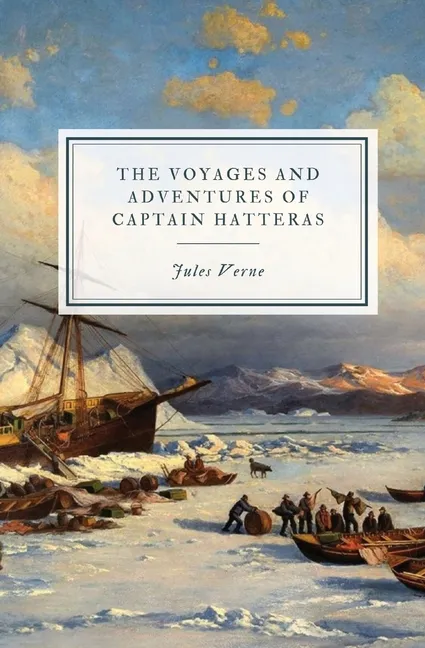
The narrative described a British expedition to the North Pole led by Captain John Hatteras that occurred in 1861. Despite the crew's mutiny costing their ship its life, Hatteras and a few other men continue the journey. He finds the wreckage of a ship from the previous American mission along the beach of the island known as "New America."
Doctor Clawbonny remembers the design for the actual Ice palace, which was built entirely out of ice in Russia in 1740 to create a snow house where they were supposed to spend the winter. The travelers survive their winter on the island mostly because of Doctor Clawbonny's inventiveness.
The water loses its ice after winter is over. The travelers construct a boat from the wreck and move in the direction of the pole. They find an island with an active volcano here and give it the name Hatteras. The gang locates a fjord with difficulty and makes landfall. They arrive at the volcano's mouth after three hours of climbing. Hatteras leaps into the crater where the pole is located precisely.
The final sentence, "Captain Hatteras ceaselessly marches northward," makes this clear.
Jules Verne
Jules Verne (1828-1905) used a combination of scientific facts and his imagination to take readers on extraordinary imaginative journeys to fantastic places. In such books as Around the World in Eighty Days, From the Earth to the Moon, and Journey to the Center of the Earth, he predicted many technological advances of the twentieth century, including the invention of the automobile, telephone, and nuclear submarines, as well as atomic power and travel to the moon by rocket.
More by Jules Verne













Why Readwise Books?
Readwise Books is an ebook & audiobook platform that automatically logs how much you and your friends read, making it fun and easy to read more. Learn more →