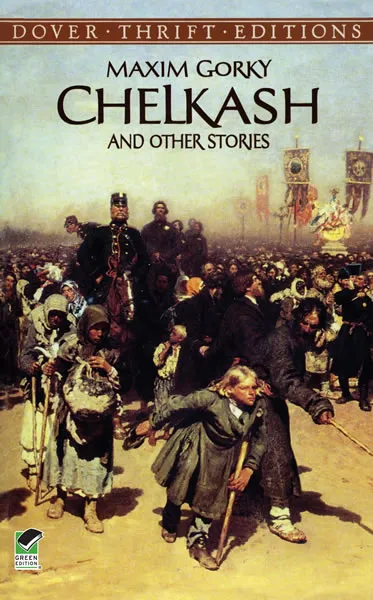
Chelkash and Other Stories
Report an issue
Tell us what's wrong and we'll take a look.
Thanks – we got it. We'll review and follow up if needed.
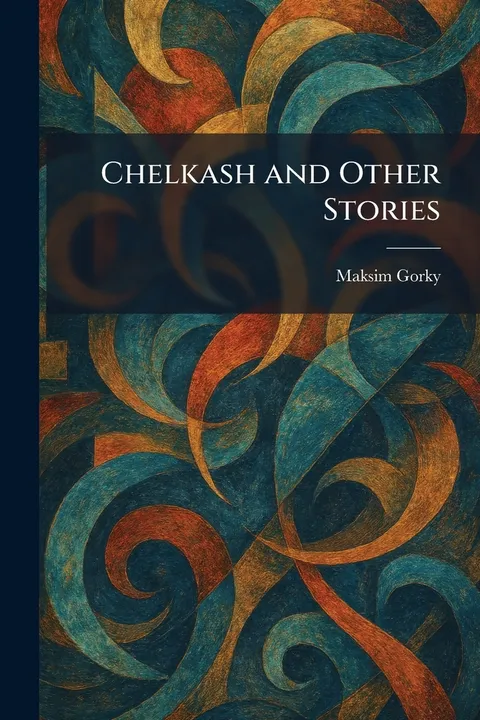

The first great Russian writer to emerge from the ranks of the proletariat, Maxim Gorky (1868–1936) was born into poverty and orphaned at an early age. Entirely self-taught, he experienced firsthand the suffering, injustice, and despair which permeate his tales. Speaking for the social outcast, the downtrodden, and the oppressed, he vividly depicted the miserable loves of the lowest classes who raged in protest against an uncaring society. His sensitivity and candor won him a devoted following.
Three of Gorky's best known appear in this collection — the title story, in which a thieving vagrant takes on a young, unwilling apprentice; "Makar Chudra," the story of an ill-fated, tempestuous romance between a pair of gypsy lovers; and "Twenty-six Men and a Girl," widely regarded as Gorky's best short story, in which a wretched crew of pretzel-makers, laboring in a damp and grimy cellar, destroy their only source of joy.
Student and general readers alike will value this affordable collection of powerful tales by one of Russia's best-loved authors and greatest portrayer of the "lower depths."
Maxim Gorky
Alexei Maximovich Peshkov, better known as Maxim Gorky, was a renowned Russian and Soviet writer and a strong advocate for socialism. Born on March 28, 1868, in Nizhny Novgorod, Russia, he became one of the most prominent figures in Russian literature during the late 19th and early 20th centuries. Gorky's works often reflected his deep concern for the oppressed and his belief in social justice, which made him a leading figure in the socialist movement. His literary contributions include novels, plays, and short stories that critiqued social inequality and the human condition. Gorky was nominated five times for the Nobel Prize in Literature, a testament to his influence and the impact of his writing. His personal life included a marriage to Yekaterina Peshkova, from 1896 to 1903, though he later separated from her. Maxim Gorky spent his later years in Gorki-10, Russia, where he died on June 18, 1936, at the age of 68. His legacy as a writer and a proponent of socialist ideals continues to be a significant part of Russian literary history.
More by Maxim Gorky



Why Readwise Books?
Readwise Books is an ebook & audiobook platform that automatically logs how much you and your friends read, making it fun and easy to read more. Learn more →