Report an issue
Tell us what's wrong and we'll take a look.
Thanks – we got it. We'll review and follow up if needed.
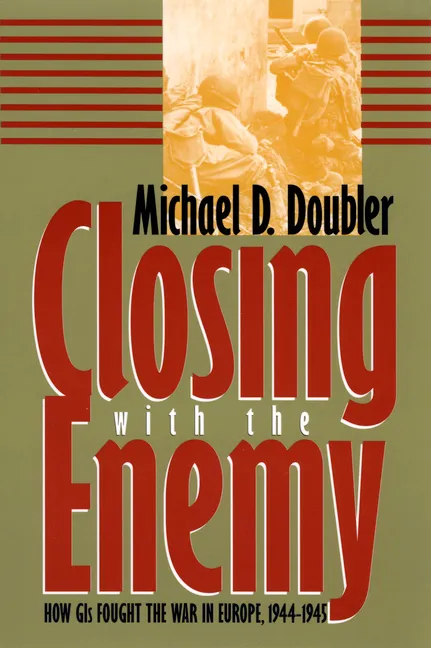
Doubler portrays a far more capable and successful American fighting force than previous historians--notably Russell Weigley, Martin Van Creveld, and S.L.A. Marshall--have depicted. True, the GIs weren't fully prepared or organized for a war in Europe and have often been viewed as inferior to their German opponent. But, Doubler argues, they more than compensated for this by their ability to learn quickly from mistakes, to adapt in the face of unforeseen obstacles, and to innovate new tactics on the battlefield. This adaptability, Doubler contends, was far more crucial to the American effort than we've been led to believe.
Fueled by a fiercely democratic and entrepreneurial spirit, GI innovations emerged from every level within the ranks-from the novel employment of conventional weapons and small units to the rapid retraining of troops on the battlefield. Their most dramatic success, however, was with combined arms warfare--the coordinated use of infantry, tanks, artillery, air power, and engineers--in which they perfected the use of air support for ground operations and tank-infantry teams for breaking through enemy strongholds.
Doubler argues that, without such ingenuity and imaginative leadership, it would have been impossible to defeat an enemy as well trained and heavily fortified as the German army the GIs confronted in the tortuous hedgerow country of northern France, the narrow cobble-stoned streets of Aachen and Brest, the dark recesses of the Huertgen Forest, and the frigid snow-covered hills of the Ardennes.
Doubler offers a timely reminder that "the tremendous effects of firepower and technology will still not relieve ground troops of the burden of closing with the enemy." As even Desert Storm suggests, that will likely prove true for future high-tech battlefields, where an army's adaptability will continue to be prized.
Michael D Doubler
Lieutenant Colonel Michael D. Doubler serves in the office of the Chief of the National Guard Bureau, Headquarters, Department of the Army, Washington, D.C. He received his Ph.D. from Ohio State University and has taught at the U.S. Military Academy at West Point.
More by Michael D Doubler



Why Readwise Books?
Readwise Books is an ebook & audiobook platform that automatically logs how much you and your friends read, making it fun and easy to read more. Learn more →