
Eve's Ransom
Report an issue
Tell us what's wrong and we'll take a look.
Thanks – we got it. We'll review and follow up if needed.
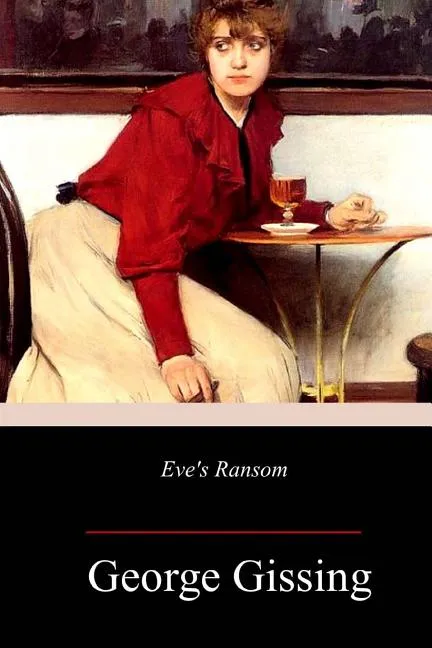
"Eve's Ransom" by using George Gissing is a poignant story that delves into the complexities of affection, sacrifice, and redemption in Victorian society. The story revolves across the significant character, Harold Biffen, a suffering creator whose existence takes a dramatic turn whilst he unexpectedly inherits a good sized fortune. Harold's newfound wealth permits him to pursue his literary goals and win the love of Eve Madeley, a girl he has lengthy favorite. However, their budding romance is soon overshadowed with the aid of the arrival of a mysterious stranger, Julian Eversleigh, who claims to be Eve's husband. As Harold grapples with his emotions for Eve and the ethical dilemmas posed via Julian's presence, he's compelled to confront the actual nature of love and the sacrifices it needs. Meanwhile, Eve unearths herself torn between her loyalty to Julian and her developing affection for Harold. Against the backdrop of Victorian London, Gissing masterfully explores themes of social elegance, morality, and the pursuit of happiness. Through richly drawn characters and brilliant prose, he offers a nuanced portrayal of human relationships and the inherent conflicts among obligation and desire.
George Gissing
George Gissing (1857-1903) was an English novelist. Born in Yorkshire, he excelled as a student from a young age, earning a scholarship to Owens College where he won prizes for his poetry and academic writing. Expelled and arrested for a series of thefts in 1876, Gissing was forced to leave England for the United States, teaching classics and working as a short story writer in Massachusetts and Chicago. The following year, he returned to England and embarked on a career as a professional novelist, publishing works of naturalism inspired by his experience of poverty and the works of Charles Dickens. After going through an acrimonious divorce, Gissing remarried in 1891 and entered a turbulent relationship with Edith Alice Underwood, with whom he raised two children before separating in 1897. During this time, after writing several unpublished novels, Gissing found success with New Grub Street (1891), Born in Exile (1892), and The Odd Women (1893). In the last years of his life, Gissing befriended H.G. Wells and travelled throughout Italy, Germany, and France, where he died after falling ill during a winter walk.
More by George Gissing



Why Readwise Books?
Readwise Books is an ebook & audiobook platform that automatically logs how much you and your friends read, making it fun and easy to read more. Learn more →