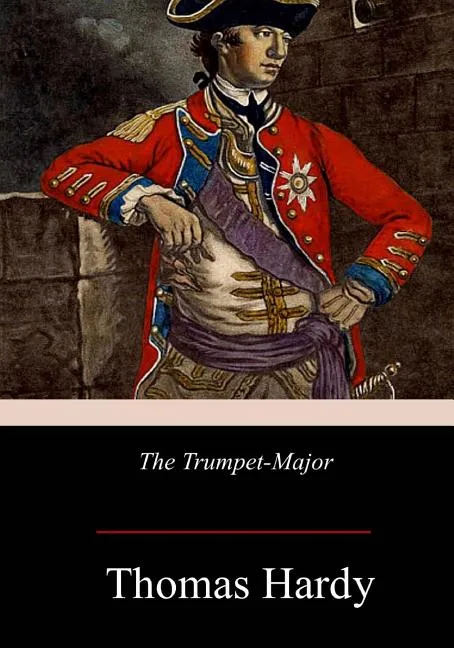
The Trumpet-Major
Report an issue
Tell us what's wrong and we'll take a look.
Thanks – we got it. We'll review and follow up if needed.
This historic book may have numerous typos and missing text. Purchasers can download a free scanned copy of the original book (without typos) from the publisher. Not indexed. Not illustrated. 1880 edition. Excerpt: ...these unfortunate days. He might have gone to Weymouth every afternoon, stood before Gloucester Lodge till the King and Queen came out, held his hat in his hand, and enjoyed their Majesties' smiles at his homage all for nothing--watched the picketmounting, heard the different bands strike up, observed the staff; and, above all, have seen the pretty Weymouth girls go trip-trip-trip along the Esplanade, deliberately fixing their innocent eyes on the distant sea, the gray cliffs, and the sky, and accidentally on the soldiers and himself. "I'll raze out her image," he said. "She shall make a fool of me no more." And his resolve resulted in conduct which had elements of real greatness. He went back to his father, whom he found in the mill-loft. "Tis true, father, what you say," he observed; "my brains will turn to bilge-water if I think of her much longer. By the oath of a--navigator, I wish I could sigh less and laugh more. Gad, she's gone. Why can't I let her go, and be happy? But how begin?" "Take it careless, my son," said the miller, "and lay yourself out to enjoy snacks and cordials." "Ah--that's a thought!" said Bob. "Baccy is good for't. So is sperrits. Though I don't advise thee to drink neat." "Baccy--I'd almost forgot it!" said Captain Loveday. He went to his room, hastily untied the package of tobacco that he had brought home, and began to make use of it in his own way, calling to David for a bottle of the old household mead that had lain in the cellar these eleven years. He was discovered by his father threequarters of an hour later as a half-invisible object behind a cloud of smoke. The miller drew a breath of relief. "Why, Bob," he said, "I thought the house was a-fire!" "I'm smoking rather fast to drown my reflections, father. Tis no...
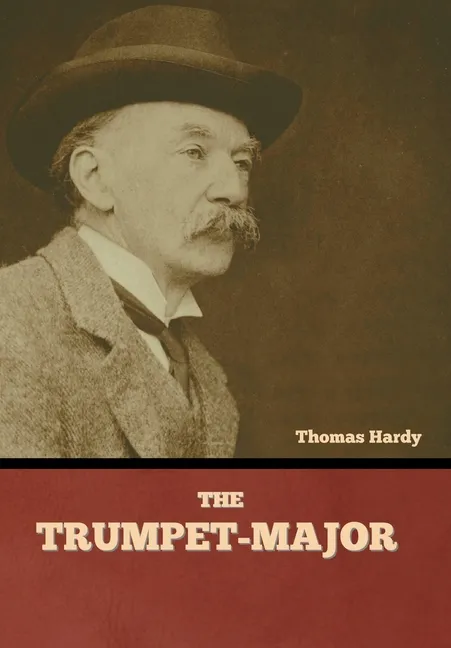
Thomas Hardy
Thomas Hardy was born at Upper Bockhampton near Dorchester in Dorset. His father was a stonemason. His mother was ambitious and well-read and supplemented his formal education. Hardy trained as an architect in Dorchester before moving to London to take up employment. He won prizes from the Royal Institute of British Architects and the Architectural Association.
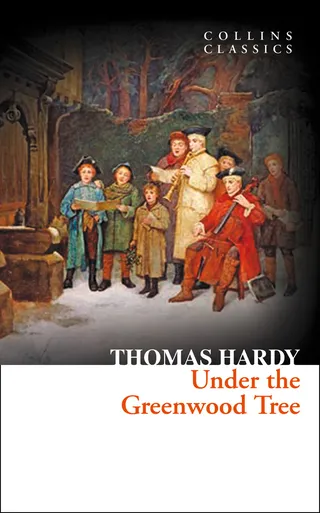
His first novel, The Poor Man and the Lady, was finished in 1867 but failed to find a publisher. Desperate Remedies (1871) and Under the Greenwood Tree (1872) were published anonymously. In 1873, A Pair of Blue Eyes was published under his own name. The story draws on Hardy's courtship of Emma Gifford whom he married in 1874. His next novel, Far from the Madding Crowd (1874) was successful enough for Hardy to be able to give up his architectural work and take up a full-time literary career.
Over the next 25 years, Hardy produced 10 more novels. The Hardys moved from London to Yeovil, and then to Sturminster Newton, where he wrote The Return of the Native (1878). In 1885, they returned to Dorchester, moving into Max Gate, a house which Hardy had designed himself.
In 1898, Hardy published his first volume of poetry, Wessex Poems, a collection of poems written over the previous 30 years. Hardy continued to publish collections until his death in 1928.
More by Thomas Hardy








Why Readwise Books?
Readwise Books is an ebook & audiobook platform that automatically logs how much you and your friends read, making it fun and easy to read more. Learn more →