Satan's Diary
Report an issue
Tell us what's wrong and we'll take a look.
Thanks – we got it. We'll review and follow up if needed.
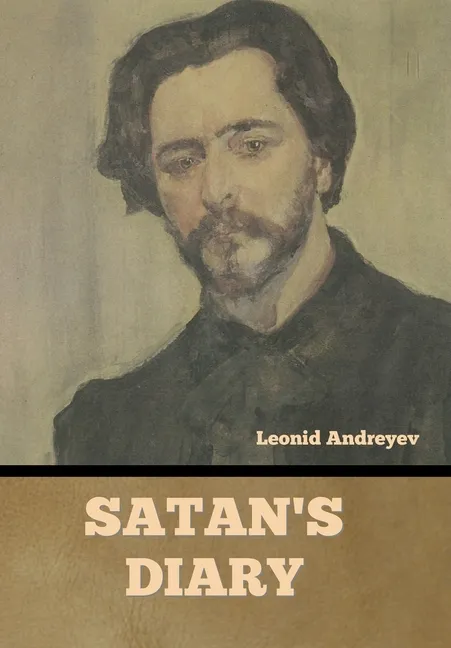
Satan’s Diary by Leonid Andreyev is a dark, philosophical novella that delves into themes of good, evil, and human nature. The story is told from the perspective of Satan, who is portrayed as an observer of human life and emotions. After being cast out of Heaven, Satan embarks on a journey through the world, writing in his diary as he reflects on the lives of humans and the complexities of their actions.
Throughout the diary, Satan reveals his growing disillusionment with mankind. While he originally believed that humans could be easily corrupted and influenced by evil, he begins to witness their capacity for self-deception, suffering, and tragic choices. The story explores the tension between human free will and the concept of fate, with Satan’s musings offering a cynical yet deeply introspective look at humanity’s flaws and potential for both good and evil.
Satan’s Diary is an exploration of existential despair, the nature of sin, and the paradoxical role of evil in the human experience.
Leonid Andreyev
Leonid Andreyev (1871-1919) was a prominent Russian writer known for his profound psychological and existential explorations. Born in Oryol, Russia, Andreyev initially trained as a lawyer before turning to literature. His work is often characterized by a deep exploration of human psychology, a focus on existential themes, and a critique of social and political conditions in pre-Revolutionary Russia. Andreyev's writing is marked by its intensity and vividness, capturing the emotional and psychological complexities of his characters. His notable works include The Seven Who Were Hanged (1908), which examines the psychological impact of facing execution, and The Red Laughter (1904), a satirical critique of societal norms. He also wrote short stories and plays, contributing significantly to Russian literature with his innovative narrative techniques and exploration of dark, existential themes. A contemporary of other Russian literary giants such as Anton Chekhov and Maxim Gorky, Andreyev's work reflects the turbulent social and political climate of his time. His writing remains influential for its bold examination of human nature, morality, and the often brutal realities of life under authoritarian regimes.
More by Leonid Andreyev









Why Readwise Books?
Readwise Books is an ebook & audiobook platform that automatically logs how much you and your friends read, making it fun and easy to read more. Learn more →